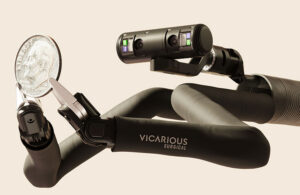
This testing, required for the planned first clinical indication of ventral hernia repair for the company’s surgical robot platform, marks a vital step toward design validation, clinical readiness and the Waltham, Massachusetts-based company’s targeted design freeze milestone.
Vicarious designed its robot to increase the efficiency of surgical procedures. It aims to enhance freedom of movement, improve visualization in the surgical field and push the boundaries of minimally invasive robotic-assisted surgery with a single incision.
After several delays to its timelines, Vicarious continues to move forward with its robotic platform. In August 2025, the company said it would hold off on clinical trial initiation to further develop its robot. At that time, the company earmarked the end of 2026 for its design freeze.
At the start of this year, the company successfully completed an in-vivo porcine lab for the robot. It said the lab reinforces its progress toward a system design freeze earmarked for the end of 2026. Speaking on the DeviceTalks Weekly Podcast, CEO Stephen From recently outlined the company’s plans for the robot.
(Learn more about the surgical robotics space in our MassDevice Surgical Robotics Special Report. Download the report for free here.)
Vicarious Surgical said the milestone represents the first system-level performance evaluation of its three core instruments. Those comprise needle drivers, fenestrated graspers and monopolar scissors, each designed for use with its robot. Vicarious said its monopolar scissors, which demonstrated successful electrical performance in a December porcine lab study, exhibited strong motion and mechanical cutting capabilities following its standard automated calibration and bring-up process.
Additionally, instrument and camera sensors remained stable. The company reported no degradation in video or motion quality in the presence of monopolar electrosurgical energy. It says this confirms robust system performance under clinically relevant operating conditions.
The successful testing of all three instruments in a unified evaluation serves as a critical step in systematically de-risking the company’s path toward first-in-human use.
Vicarious said this sets it up for the next phase of preclinical validation, including cadaveric and porcine studies.
“This milestone represents an important step in systematically de-risking our system as we advance toward design freeze and first-in-human use,” From said in a news release. “Demonstrating reliable, integrated performance across our full instrument suite, including stability under electrosurgical energy, reinforces our confidence in the system architecture and our development timeline. Each successful test brings us closer to enabling a new standard in minimally invasive robotic surgery.”