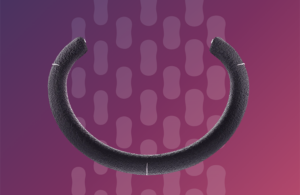
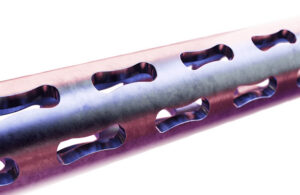
The Memo 4D Curve broadens the company’s Memo surgical mitral repair platform, adding an open-ring configuration with a semi-rigid annuloplasty implant featuring a laser-cut nitinol cell structure.
The device received FDA clearance this past June, carrying sizes from 24 mm to 42 mm, which the company says can address the full spectrum of patient pathology, including degenerative disease and dilated annuli.
Related: Corcym completes first human use of RelyOn-R robotic delivery system
The Memo 4D Curve’s open flexibility is designed to preserve the three-dimensional motion of the mitral annulus while remodeling and supporting the valve’s structure to reduce regurgitation.
The first U.S. procedure was performed at UVA Health University Medical Center in Charlottesville, Virginia, by Michael Ibrahim, director of robotic cardiac surgery.
Earlier this month, Corcym reported the first-in-human implantation of the open TriMemo ring for tricuspid valve repair at the Cleveland Clinic. Its nitinol structure also delivers graduated stiffness to match flexes in the tricuspid’s anatomy.
Corcym’s Memo platform of valve repair devices dates back 20 years, and includes the close-ringed Memo 4D and Memo 3D. The company’s mitral and tricuspid portfolio also offers the polyester and silicone Annuloflex band, plus the Carbomedics family of mechanical valves.
This past March, Corcym’s next-generation sutureless aortic valve, the Perceval Plus Lancelot, recorded its first U.S. procedure as well.