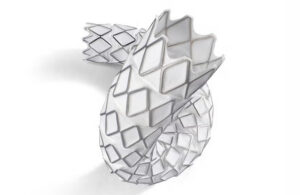
The Viabahn VBX endoprosthesis was greenlit for use in both fenestrated and branched endovascular aortic repairs, known as FEVAR and BEVAR, where an aneurysm develops too close to the aorta’s branches for a single device to be used.
The company said the label expansion makes it the first on-label bridging stent graft for the minimally invasive procedures in the U.S. The implant was first approved in 2017 to treat narrowed lesions hampering the flow of blood through the iliac arteries, and it received a CE mark in FEVAR and BEVAR in 2025.
The label expansion follows a presentation earlier this month of real-world data from the company’s ongoing registry study, which tracked Viabahn VBX’s use as a bridge in conjunction with a fenestrated or branched stent graft. The implant is designed to connect with an aortic endograft and support the smaller arteries feeding the kidneys and gastrointestinal tract.
Presented at the annual meeting of the European Society for Vascular Surgery in Belgrade, Serbia, the implants demonstrated 97.5% vessel-level primary patency in FEVAR procedures after three years and 93.9% freedom from target vessel instability in 208 vessels treated across 103 patients.
Related: Cook treats final patient in endovascular graft study
For BEVAR—including 165 patients and 454 target vessels treated—three-year primary patency reached 94.0%, with 88.4% freedom from instability, including complications such as vessel occlusion, stenosis, and endoleaks.
“Alongside the expanded U.S. indication for the VBX Stent Graft, these three-year EMBRACE Registry outcomes add important longer-term evidence in complex aortic care,” said Matt Eggers, Gore’s global peripheral business leader. “We will continue sharing real-world results as follow-up progresses, giving physicians a clearer picture of the longer-term performance of the VBX Stent Graft in FEVAR and BEVAR.”
In 2024, the stainless steel and fluoropolymer Viabahn VBX received FDA approval for a lower-profile delivery system, allowing 6 French configurations without any changes to the stent itself. Its design allows clinicians to customize its diameter and flare out the ends as procedures require.
