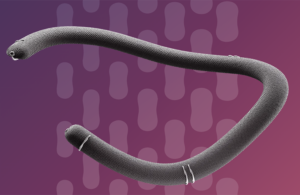
The ring comprises three layers: a carbon film coating over the oval silicone sheath, which together guard the laser-cut nitinol cell structure. Nitinol, a superelastic nickel-titanium alloy, allows the device to flex with the heart’s movements without losing its original shape.
Corcym designed TriMemo with graduated stiffness and an open-ended shape to match the tricuspid valve’s anatomy. Its features, like detachable sizers and clear positioning markers, are meant to work for all types of surgery, including robotic operations and sternotomy, according to Corcym.
Dr. A. Marc Gillinov, chair of the Department of Thoracic and Cardiovascular Surgery and Judith Dion Pyle, chair in Heart Valve Research, performed the first-in-man procedure using the device at the Cleveland Clinic.
“It was a privilege to be part of the team performing the first-in-man implant of the ring for tricuspid valve repair,” Gillinov said in a news release. “The device performed very well, and I’m encouraged by what we’ve seen so far.”
The FDA cleared TriMemo earlier this year, and it is commercially available in the United States. Corcym will introduce the device to the international cardiac surgery community in October at the EACTS Annual Meeting, according to a news release.
TriMemo is the newest addition to Corcym’s Memo platform, a collection of valve repair devices dating back 20 years. Both the mitral and tricuspid devices are designed to support the physiological movement of the valve while guiding it back to its natural shape.
“This first-in-human implantation is a defining moment for Corcym,” Corcym CEO Christian Mazzi said in the news release. “TriMemo embodies the dedication of our teams and the surgeons who guided us at every step. To see it perform validates the technology and our approach to innovation: building on what surgeons trust, and tailoring it to where it’s needed most.”
Mazzi discussed Corcym’s goals for heart valve replacement during an appearance on our DeviceTalks Weekly podcast in 2025: