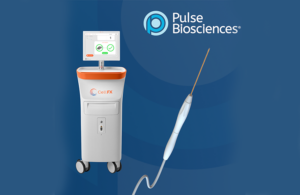
Hayward, California-based Pulse said it wants to prioritize and accelerate the development and future commercialization of nPulse. As a result, the company plans to centralize resources on the cardiac catheter platform, modifying capital allocation to prioritize the electrophysiology (EP) market development program.
nPulse delivers a complete circumferential lesion in a single, brief energy application without the need to stack lesions. It also eliminates the need to stop, rotate and reposition the catheter. The technology utilizes its CellFX nanosecond pulsed field ablation (nsPFA) technology. It features a percutaneous electrode system, which the FDA cleared in 2025. It enables the ablation of soft tissue in percutaneous and intraoperative surgical procedures. The company also picked up IDE for its Cardiac Clamp in September 2025.
The company plans to dedicate the majority of R&D and clinical investment toward the nPulse system and its upcoming pivotal FDA investigational device exemption (IDE) study in the U.S. and Europe and corresponding regulatory submission. This study evaluates the company’s PFA technology in the treatment of paroxysmal AFib. This study could bring Pulse Biosciences one step closer to challenging in the PFA market, which features the likes of Medtronic, Boston Scientific, Johnson & Johnson MedTech, Abbott and Kardium.
Read also: Pulse Biosciences CTO outlines his strategy for medtech success.
Pulse said it remains committed to enrolling patients in a study of its Surgical Clamp technology. However, it plans to reduce short-term market developments in cardiac surgery. It also plans to streamline operations for its percutaneous soft-tissue ablation system. The company is working its Vybrance technology toward an on-label indication for treating benign thyroid nodules. This streamlining allows for an investment reduction to redirect resources to the catheter program.
“We are thrilled to be allocating additional resources to the vast potential of our catheter-based EP program,” said Paul LaViolette, CEO and co-chair. “We are fortifying a program that has already shown the potential to be first-in-class and best-in-class.”
Pulse Biosciences shares European feasibility data for nPulse
To go along with the strategic realignment, Pulse announced clinical outcomes from a 150-patient European feasibility study. This study highlighted nsPFA’s unique combination of speed, safety and long-term durable efficacy in treating AFib, the company said.
Outcomes included 100% procedural success at six months, with 75/75 evaluable patients achieving pulmonary vein isolation (PVI) success.
At 12 months, 96% of patients sustained success. Long-term follow up showed that 45/57 patients confirmed highly durable PVI. The company said this exceeded traditional expectations where approximately 20%-25% recurrence is common.
Pulse Biosciences also reported procedural efficiency, reducing the time spent in the heart. Total procedure time averaged out to 65 minutes, with just 9.8 minutes of fluoroscopy. The company reported a low 1.3% rate of serious adverse events.
“The European feasibility data from over 150 patients sends a definitive message,” said Bob Duggan, co-chair of Pulse Biosciences. “The nPulse clinical performance demonstrates a clear potential to change clinical practice for the health treatment of millions of patients. Our mission to support this program deserves our highest priority, and we are updating our capital allocation to align with this extraordinary opportunity.”