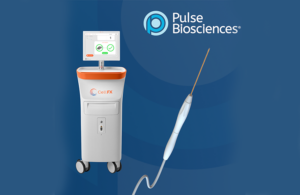
Long-term follow-up data came from the nPulse Vybrance percutaneous electrode system first-in-human ablation study. It evaluated the ablation of benign thyroid nodules using nanosecond pulsed field ablation (nsPFA) energy.
Hayward, California–based Pulse designed its nPulse technology to deliver a complete circumferential lesion in a single, brief energy application without the need to stack lesions. It also eliminates the need to stop, rotate and reposition the catheter. The technology utilizes its CellFX nanosecond nsPFA technology and features a percutaneous electrode system, which the FDA cleared last year.
Investigators used Pulse Biosciences’ CellFX percutaneous electrode system under ultrasound guidance to ablate nodules. They performed either isolated ablations to assess tissue response or for full treatment of thyroid nodules with therapeutic intent.
Long-term follow-up demonstrated significant and sustained volume reduction of treated benign thyroid nodules at 15-22 months. Investigators also reported no tissue regrowth and no serious adverse events. Dr. Stefano Spiezia presented the findings at the North American Society for Interventional Thyroidology 2026 meeting in Portland, Oregon. Findings come about six months after Pulse first shared outcomes from its first-in-human feasibility study.
Read also: Pulse Biosciences CTO outlines his strategy for medtech success.
Key findings from the study
Spiezia conducted the initial feasibility study, which extended for long-term follow-up. It evaluated 21 total patients between 15 and 22 months to assess volume reduction trends over time.
During that period, investigators saw durable results with an average of 74% volume reduction of treated benign thyroid nodules. They reported overwhelming patient satisfaction as well, with continued volume reduction improvements from one month through 22.
Investigators also saw no regrowth of nodules at 15-22 months. At final follow-up, results show that 100% of patients were “highly satisfied” in cosmetic satisfaction and 95% were highly satisfied in overall satisfaction.
The study had no serious adverse events, with no intranodular fibrosis detected on ultrasounds at 15-22 months.
Pulse Biosciences claims that the long-term benefits highlight the uniqueness of nsPFA compared to other forms of PFA technology. It specifically highlighted the speed of particle flow and the absolute voltage pressure per unit of time as key differentiators.
Commentary from Pulse Biosciences officials and investigators
Spiezia, the chief of endocrine surgery at Ospedale del Mare in Naples, Italy, said:
“These long-term data from the initial feasibility study provide an early view into the potential of nPulse Vybrance for the durable ablation of benign thyroid nodules. Within this feasibility study we were able to demonstrate significant volume reduction, without regrowth or serious adverse events out to 15 to 22 months. Of the patients treated in this study, 100 percent were highly satisfied with their cosmetic appearance, and 95 percent were highly satisfied with their overall treatment, which is encouraging given the duration of follow-up in this feasibility study. This study provides the foundation for future research in using nsPFA energy, a highly differentiated nonthermal energy source, for the treatment of benign thyroid nodules. In the future, with continued data to support, I see nsPFA energy emerging as a potential nonthermal paradigm in the treatment of benign thyroid nodules.”
Paul LaViolette, CEO and co-chair of Pulse Biosciences, said:
“These data on initial feasibility and clinical durability demonstrated significant progress in the development of clinical evidence for the use of nsPFA energy for the ablation of benign thyroid nodules. While the work to establish clinical outcomes of nPulse Vybrance for benign thyroid nodules is early, these data provide the first long-term results of sustained tissue responses. Evidence of sustainable volume reduction and high patient satisfaction, added to the inherent procedural safety and soft tissue response of nsPFA ablation, provide promising signals to pursue in our future market development work. Our plans for non-cardiac nsPFA will be made clearer in the second half of 2026. We extend our highest gratitude to Professor Stefano Spieza and our clinical investigators who continue to lead this important clinical work.”