The IDE enables the Hayward, California–based company to initiate the NANOPULSE-AF study of its nPulse cardiac catheter ablation system. The study evaluates the company’s PFA technology in the treatment of paroxysmal AFib. This study could bring Pulse Biosciences one step closer to challenging in the PFA market, which features the likes of Medtronic, Boston Scientific and Johnson & Johnson MedTech.
The single-arm, multicenter, prospective study evaluates the primary safety and effectiveness of the nsPFA system in recurrent, drug-resistant symptomatic paroxysmal AFib. It includes up to 30 sites, including three outside the U.S. Pulse Biosciences intends to enroll up to 145 patients.
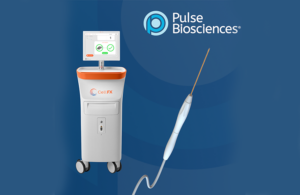
nPulse delivers a complete circumferential lesion in a single, brief energy application without the need to stack lesions. It also eliminates the need to stop, rotate and reposition the catheter. The technology utilizes its CellFX nanosecond pulsed field ablation (nsPFA) technology. It features a percutaneous electrode system, which the FDA cleared earlier this year. It enables the ablation of soft tissue in percutaneous and intraoperative surgical procedures. The company also picked up IDE for its Cardiac Clamp in September.
Pulse Biosciences currently has an ongoing early feasibility study in Europe with 150 patients enrolled. Positive initial outcomes support a strong foundation of real-world evidence to support broader adoption of its PFA technology.
Dr. David Kenigsberg, the company’s chief medical officer, said that, unlike existing systems that rely on microsecond energy delivery, the nanosecond PFA platform can deliver meaningfully lower total energy. This could potentially reduce collateral injury to surrounding structures. Kenigsberg said it could “set a new standard for AFib ablation.”
“This FDA IDE approval is a major milestone for Pulse Biosciences and is a testament to the strength of our preclinical and human clinical data,” said Paul LaViolette, co-chair and CEO of Pulse Biosciences. “With the support of leading electrophysiologists, we believe our proprietary nanosecond PFA represents a next-generation energy modality with the potential to improve the safety, effectiveness, and efficiency of AFib ablation through a simpler, clinician-friendly procedure. We look forward to sharing follow-up data in 2026.”