
Scott Nelson, co-founder and CEO of FastWave Medical
More than a third of insured American adults, and three in four without coverage, skipped or delayed healthcare they needed last year because they couldn’t afford it, according to a 2025 KFF survey. And cost is only one barrier. Patients who can pay still run into a specialist booked six months out, a hospital too far to reach, or paperwork no one has time to file.
For medtech companies, that means your device can clear FDA review and still sit unused if a patient can’t find it, afford it, or access it. Closing that gap takes deliberate decisions about pricing, distribution, workflow, and reimbursement — separate from the engineering that got the product approved.
As co-founder and CEO of FastWave Medical, and as someone who’s interviewed more than 250 medtech founders and CEOs, I’ve realized that startup leaders who move the needle on access treat it as a design problem, not something that simply resolves itself once the product is in market.
Below are five proven startup CEOs on how they intentionally design for access — building healthcare access into their businesses, including key decisions related to infrastructure, distribution, and reimbursement.
Lowering the price is only the first step

“How do we decentralize and democratize access?” Srivastava says. “If technology is expensive, it is not going to reach the masses.”
Getting there took a small team of engineers working out of Srivastava’s home in India, with no bureaucracy between an idea and a prototype, and a physician-CEO who knew firsthand what the end user needed. This is how SS Innovations built an entire generation of the platform, Mantra 3, in just five months. Manufacturing in India further reduced costs, and the finished system landed at roughly a third the price of the leading competitor.
A lower price doesn’t necessarily reach a patient who lives nowhere near a major hospital. So the company built teleproctoring and telesurgery into the platform from the start, and has now completed more than 175 telesurgeries, including one performed roughly 20,000 km away.
The lesson: A lower price removes one barrier to access. Reaching patients who don’t live near a major health system takes infrastructure, telepresence, and training built into the product strategy from day one.
Build more than one door into an existing patient journey

“How can women access it? It’s one of the biggest problems most of us as patients face,” Lehman says.
Clairity launched at Beth Israel Deaconess, and other sites have since experimented with scoring patients either at the time of their screening mammogram or by running the score on a prior exam. The product slots into two existing workflows: breast imaging centers already collecting clinical risk data can add the AI-based score alongside it; or, centers that want to take a more proactive approach can pull mammograms from their PACS systems, run Clairity, and reach out directly to patients who screen as high-risk.
Access today is self-pay while Clairity pursues a CPT code and payer coverage. In the meantime, a partnership with EverlyWell opened a direct-to-patient pathway, so a woman doesn’t have to wait for her own hospital to formally offer the product before she can get access. The FDA requires a prescription from a healthcare provider, not necessarily a physician, and Lehman notes that patients themselves own their mammogram images — which opens more than one route to access Clairity.
The lesson: Don’t force patients or providers down a single path to a new technology. Building in multiple access options — different workflows, different moments in time, different payment options — can potentially reach far more patients.
Put care in the places people already go

“You need to meet people where they’re showing up already,” Ganesh says. Case in point: CareStations sit inside children’s centers, community areas, senior living facilities, airports, universities, and even prisons.
Getting into those locations runs through enterprise partners. OnMed’s clients are payers, providers, employers, universities, and philanthropic organizations, and the company expects to be operating in more than 35 states by the end of 2026. Because these partners cover the cost, a patient walking into a CareStation typically pays nothing.
Ganesh built the CareStation as a deliberate blend of the two models: the comprehensiveness and psychological comfort of a clinic visit, plus telemedicine’s ability to scale. A video call alone can’t take vitals, run scans, or capture biometrics. And it’s the live human clinician on screen, not an automated interface, that Ganesh credits for a 37% return rate within a patient’s first 12 months. “The tech isn’t overwhelming them,” he says. “They’re coming back because they’ve got the psychological safety and the comfort that they’re getting taken care of.”
The lesson: Expanding access takes two things working together — showing up where a population already is, and finding an enterprise partner willing to pay for that access so the patient doesn’t have to.
Find multiple ways to convert demand into access

“It’s a prescription device,” Yecies says. “But we have a very consumer-friendly way to get it.” A patient orders through the company’s website and pays out of pocket, with the device FSA- and HSA-eligible. The prescription can come one of several ways: A personal physician can order it through their EMR, fax it in, or call it in, and a single online pharmacy ships the device directly. Patients without a physician can use a telehealth visit instead, answering a short set of questions to get the prescription in a similar way. The traditional path — a doctor diagnosing osteopenia and recommending Osteoboost directly — still works, too.
Removing every unnecessary step between a patient and the product also shaped how Osteoboost built demand for its device. When FDA clearance was announced in 2024, a sign-up form on the website drew thousands of names before the company had a sales team. Rather than wait for a full commercial launch, Yecies offered her waitlist a “Founders Program,” early pre-order access, and shipped the first devices to that group before the public release. “Yes, the patients are the sales force,” she says, pointing to how pharmaceutical companies already run consumer ads for rare conditions instead of pitching physicians alone. Osteoboost adopted the same logic before it built a commercial team.
The lesson: A prescription requirement doesn’t have to mean a single, doctor-gated path to a product. Open several pathways to a prescription, treat your earliest patients as ambassadors, and pent-up demand can become efficient distribution before you need to build a sales team.
Design your trial for the market you actually believe in
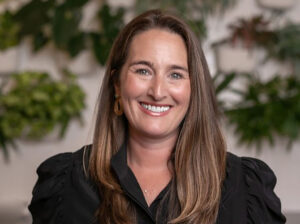
“We always knew the market was everybody,” Egan says. “No one cared to do this when they thought the market was a group disengaged from their health.”
Early in Teal’s pivotal trial planning, regulators suggested a narrower path: enroll only women already flagged as high-risk by a prior abnormal HPV result. It was a smaller, easier-to-recruit group, built on the assumption that at-home testing would mainly appeal to women already disengaged from screening. Egan expanded the 16-site trial to match the broader U.S. population instead — a harder, slower study to run, but one that earned Teal a general indication rather than clearance for only the narrower population regulators had proposed.
Teal treats reimbursement as its own access problem. The screening test is billed today through insurers including Cigna, Blue Cross Blue Shield, and United, with a separate cash-pay option for patients without coverage. Starting in January 2027, ACA rules will require private insurers to cover it with no cost-sharing — no copay, no deductible, no coinsurance — which should widen access considerably.
The lesson: The easier, faster clinical path can quietly lock in someone else’s assumption about who your customer is. Test the market you actually believe exists, even when a narrower, easier-to-enroll study looks less risky. The population a trial proves out becomes the population your product — and its reimbursement case — ends up serving.
Bottom line: Access is a design decision
Each of the five startup leaders above made deliberate decisions about how their technology would reach a patient, separate from the device design itself. Srivastava paired a lower price with the infrastructure to deliver it. Lehman built more than one way into an existing patient pathway. Ganesh put care inside places people already spend time and found enterprise partners to fund it. Yecies opened several options to a prescription and let her earliest patients recruit the next customers. Egan designed a trial around the market she believed existed, not the narrower one that would have enrolled faster. None of that shows up in a regulatory submission, but it all determines whether a product reaches the people it was designed for.

The opinions expressed in this blog post are the author’s only and do not necessarily reflect those of MassDevice or its employees.