A report in the Archives of Internal Medicine is drawing a lot of buzz from its comparison of Class I recalls for devices cleared via 510(k) or via pre-market approval.
Nearly three-quarters of Class I medical device recalls went through the 510(k) program from 2005 to 2009, proof (at least according to the authors) that high-risk devices should not be cleared for market using that quicker and less stringent 510(k) process. They argue that potentially dangerous devices should instead be reviewed via the more rigorous — and costly — pre-market approval program. Class I recalls, the most serious level, are issued for devices that could cause serious injury or death.
"The standards used to determine whether a medical device is a high-risk or life-sustaining product prior to approval are clearly very different from the standards used to recall a medical device as life-threatening," according to the report’s examination of FDA approval and recall records. "Our findings reveal critical flaws in the current FDA device review system and its implementation that will require either congressional action or major changes in regulatory policy."
Eighty of the 113 medical devices recalled during the study period were 510(k)-cleared, compared with 21 recalls of PMA devices. A deeper dive into the numbers, however, shows a remarkably similar — and low — recall rate for 510(k)s and PMAs. Of the 15,416 510(k) clearances granted between 2005 and 2009, only 80 wound up as Class I recalls — a mere 0.52 percent. For PMAs, that number is even lower. Of the 5,915 granted during the study period, only 21, or 0.36 percent, required a Class I recall.
The report is more persuasive in singling out cardiovascular devices as the largest Class I recall category, at 35 percent of 80 510(k)’s. Although that’s only 1.6 percent of the 1,792 cardiovascular clearances granted during the period, it’s three times higher than the overall Class I recall rate. (Fifty-one percent of the recalls were for devices in five other categories (general hospital, anesthesiology, clinical chemistry, neurology or ophthalmology.)
The medical device industry’s riposte, natch, is that the system is just fine. Soon after the report hit the airwaves yesterday, the Advanced Medical Technology Assn. responded to the study by calling it "flawed" because it only looked at recalls alone, rather than the overall safety of the 510(k) program. AdvaMed, the device industry’s national lobbying arm, has strongly advocated for keeping the 510(k) protocol relatively unchanged, funding several studies to highlight the need for less stringent regulation.
AdvaMed president Stephen Ubl said in a statement that making radical changes to the program in light of "remarkably low recall rates" would "harm patient access to medical technology."
Diana Zuckerman, a prominent patient safety advocate and lead author of the study, is president of the National Research Center for Women & Families. Zuckerman, a vocal proponent of disqualifying implantable devices from the 510(k) process, did not immediately return requests for comment on the study.
Last year, she was the sole public health advocate to speak during a public meeting on the 510(k) program. She told MassDevice afterward that she’s very worried about the lack of concern for public safety at such meetings.
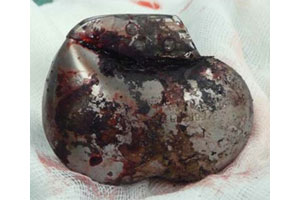
"Public health has to be bottom-line here and I did not see one word expressed in terms of concern about public health, not one word," she said. "It’s not like people in that room didn’t know that defibrillators didn’t work and people died. People in the room know it very well."
Zuckerman added that she has been surprised by the differing attitudes between medical device company reps and their counterparts in the pharmaceutical industry, who she said will at least admit that some ineffective products can slip through the regulatory cracks.
"The device company people talk about how great their products are and how great the 510(k) process used to be until it got slower," she said, adding that while she didn’t think the entire program needed to be scrapped, it does need a major overhaul.
"The 510(k) program is based on substantial equivalence to a product approved before 1976. That whole concept seems very strange for an industry that seems to pride itself on being innovative," she said.