
• Skip to primary navigation
  • Skip to main content
  • Skip to primary sidebar
  • Skip to footer

MassDevice

The Medical Device Business Journal — Medical Device News & Articles | MassDevice

  • Special Reports
  • Technologies
    • Artificial Intelligence (AI)
    • Cardiovascular
    • Orthopedics
    • Neurological
    • Diabetes
    • Surgical Robotics
  • Business & Finance
    • Wall Street Beat
    • Earnings Reports
    • Funding Roundup
    • Mergers & Acquisitions
    • Initial Public Offering (IPO)
    • Legal News
    • Personnel Moves
    • Medtech 100 Stock Index
  • Regulatory
    • Food & Drug Administration (FDA)
    • Recalls
    • 510(k)
    • Pre-Market Approval (PMA)
    • MDSAP
    • Clinical Trials
  • Resources
    • About MassDevice
    • Leadership in Medtech
    • Manufacturers & Suppliers Search
    • MedTech100 Index
    • Videos
    • Webinars
    • Whitepapers
    • Voices
    • In-Depth Coverage
    • Latest News
  • Attend DeviceTalks
    • Events
      • DeviceTalks Minnesota – May 4
      • DeviceTalks Boston – May 27–28
      • DeviceTalks West
      • DeviceTalks Tuesdays
    • DeviceTalks Podcast Network
      • DeviceTalks Weekly
      • AbbottTalks
      • Boston ScientificTalks
      • DeviceTalks AI
      • IntuitiveTalks
      • MedtechWOMEN Talks
      • MedtronicTalks
      • Neuro Innovation Talks
      • Ortho Innovation Talks
      • Structural Heart Talks
      • StrykerTalks
  • Advertise
  • Subscribe
Home » The top 10 cardio device stories of 2025

The top 10 cardio device stories of 2025

January 29, 2026 By Chris Newmarker

This is an Adobe Stock image of a heart with tech looking designs around it to go along with stories and reports about cardio device companies top cardio device company news and largest cardio device companies.
[Image from Adobe Stock]
Pulsed-field ablation, transcatheter heart valves, and intravascular lithotripsy are among the top stories, as they drive growth among the largest cardio device companies.

Though, over the past year, one of the most exciting cardio tech developments involved the revival of a technology that sparked people’s imagination for decades.

Here are the top 10 cardio device stories that gained the most attention from MassDevice’s audience over the past year:
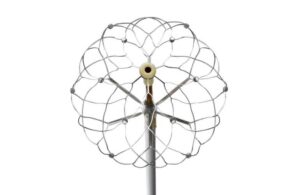
Medtronic Affera PFA Sphere-360 catheter (1)
The nitinol Affera Sphere-360 catheter for pulsed field ablation [Image courtesy of Medtronic]

10. Medtronic sees success with its Affera pulsed field ablation technology.

Medtronic, in April 2025, announced positive clinical outcomes from two studies of its pulsed field ablation (PFA) technologies for treating AFib. The studies looked at the Affera family of technologies. Those include the next-generation Sphere-360 single-shot PFA catheter and the Sphere-9 combination mapping and dual-energy focal PFA catheter.

PFA technology has generated excitement for its potential to treat AFib without some of the complications seen with radiofrequency (RF) ablation, and it has become a major growth driver at the world’s largest medtech company. In just its second quarter ending Oct. 24, 2025, Medtronic’s Cardiac Ablation Solutions revenue increased 71% year-over-year, including 128% in the U.S., driven by the success of Affera.

PFA pioneer Dr. Steven Mickelsen — co-founder of Farapulse (now part of Boston Scientific) — will appear on the second day of our DeviceTalks Cardiac Innovations Webinar Series to discuss how his venture Field Medical is designing ventricular-tachycardia-focused systems and preview his next innovation, extending PFA beyond the heart. The series runs Feb. 3–5, 2025. Register here.

Recor Medical Paradise uRDN system Medtronic Symplicity Spyral RDN side by side
The Paradise (left) and nitinol-enabled Symplicity Spyral (right) RDN systems side-by-side [Images courtesy of Recor Medical and Medtronic]

9. TCT 2025 saw more positive studies backing renal denervation.

This year’s Transcatheter Cardiovascular Therapeutics (TCT) conference saw mounting evidence in support of minimally invasive renal denervation as a therapy for high blood pressure. Medtronic released multiple study results backing its radiofrequency-based Symplicity Spyral, and Recor had positive data for its Paradise ultrasound RDN (uRDN) platform.

8. Medtronic has new leadership in Cardiovascular.

This is a portrait photo of Skip Kiil who is EVP and president of Cardiovascular at Medtronic.
Skip Kiil, Medtronic’s EVP and president of Cardiovascular [Image from Kiil’s LinkedIn profile]
Medtronic saw a change in leadership at the top of its Cardiovascular portfolio, with Skip Kiil moving from his previous post running Medtronic Cranial & Spinal Therapies to become EVP and president of Cardiovascular. The move came after the departure of Sean Salmon, who spent more than two decades at Medtronic

Medtronic appears set to boost its cardio portfolio further now that it is stepping up its shopping for tuck-in acquisitions. This month, the company invested $90 million in Anteris Technologies, which is developing a balloon-expandable, biomimetic TAVR.

Find out more about Medtronic and other major cardio device companies in our MassDevice Cardio Device Companies Special Report. Download for free here.

7. Boston Scientific has another TAVR setback.

Boston Scientific Acurate neo2 transcatheter aortic valve replacement TAVR (1)
The Acurate neo2 transcatheter aortic valve replacement (TAVR) system has a nitinol frame. [Image courtesy of Boston Scientific]
In May, Boston Scientific halted global sales of its Acurate neo2 and Acurate Prime transcatheter aortic valve replacement (TAVR) systems, citing an increased regulatory burden in the U.S. and Europe. The Accurate TAVR systems had been Boston Scientific’s next bet to compete against Edwards Lifesciences and Medtronic in the space after the discontinuation of its Lotus TAVR program five years ago.

Despite the TAVR setback, analysts say Boston Scientific is set for continued durable growth on the strength of medtech, including its Farapulse pulsed field ablation, Watchman FLX left atrial appendage closure (LAAC) device, and more.

Purchase and download our Medtech Market Intelligence Report about the transcatheter heart valves market.

6. Edwards Lifesciences acquired a miniature heart pressure sensor implant.

Vectorious V-LAP left atrial pressure management sensor
Vectorious’ V-LAP is a nitinol left atrial pressure sensor. [Image courtesy of Vectorious]
Edwards LifeSciences in 2025 spent $497 million to purchase Vectorious Medical Technologies and its V-LAP, a miniature, implantable left atrial pressure sensor. V-LAP is meant to enable the remote monitoring of the heart and congestion status. It also allows for the self-adjustment of diuretics. The goal is physician-directed patient self-management of chronic heart failure.

Mitral valve repair and replacement is another exciting area of minimally invasive cardio procedures. We’ll explore the work behind Valcare Medical’s Amend transcatheter mitral valve repair system during day three of our DeviceTalks Cardiac Innovations Webinar Series, Feb. 3–5, 2025. Register here.

5. Boston Scientific makes an IVL play.

Boston Scientific made a bid last year to compete in the intravascular lithotripsy (IVL) space, buying IVL developer Bolt Medical for $600 million upfront and another $300 million in potential milestone payments. The FDA granted 510(k) clearance for the Bolt IVL system in March 2025; Boston Scientific’s acquisition closed the next month.

Bolt Medical designed its IVL advanced laser-based platform to treat coronary and peripheral artery disease. Its novel application of lithotripsy fractures calcium by creating acoustic pressure waves inside a balloon catheter. The system also includes visible, directional emitters to ensure consistent energy delivery during the treatment of calcified lesions.

4. Abbott moves forward on pulsed field ablation tech.

This is an Abbott marketing image showing the tip of the Volt pulsed field ablation system's catheter.
The nitinol-enabled Volt PFA system [Image courtesy of Abbott]
In late 2025, Abbott secured FDA approval for its Volt pulsed field ablation (PFA) system to treat patients with AFib. The regulatory nod brought Abbott Volt to the U.S. PFA market to compete against Medtronic, Boston Scientific, Johnson & Johnson MedTech and Kardium. It followed CE mark approval for Volt earlier in the year. Abbot describes Volt as a latest generation system that pairs a balloon-in-basket catheter with the EnSite X EP heart mapping system, which helps physicians visualize and position tools like the Volt PFA catheter in the heart.

This month, Abbott hit another milestone with PFA, announcing a CE mark for its TactiFlex Duo Ablation Catheter, Sensor-Enabled

3. The FTC blocks a major TAVR acquisition.

Edwards Lifesciences’ bid to acquire JenaValve for $1.2 billion, first announced in July 2024, was increasingly in trouble through 2025 amid antitrust concerns from the Federal Trade Commission. In August, the FTC sued to stop the deal, alleging that Edwards and JenaValve represented the only two companies in the U.S. evaluating their transcatheter aortic valve replacement (TAVR) technology for the treatment of aortic regurgitation (AR). On Jan. 10, 2026, Edwards announced it would not acquire JenaValve; the decision came a day after a federal judge in D.C. granted the FTC a preliminary injunction.

2. Johnson & Johnson MedTech is getting even more focused on cardio.

Expect Johnson & Johnson MedTech’s focus on cardiology to grow even more now that it plans to separate its DePuy Synthes Orthopaedics business. The world’s second-largest medtech company has seen strong growth in its Cardiovascular business, driven by major acquisitions in recent years. Those deals include the $13.1 billion purchase in 2024 of Shockwave Medical and its intravascular lithotripsy (IVL) technology that uses sonic waves to treat calcified arterial plaque. The Shockwave purchase followed J&J’s $400 million acquisition of left atrial appendage (LAA) device maker Laminar in 2023 and the $16.6 billion purchase of Abiomed and its catheter-delivered Impella heart pumps to treat heart failure in 2022.

Tim Schmid, J&J EVP and global medtech chair, shared the company’s growth playbook during our DeviceTalks West event in Santa Clara, California, in October.

We rank J&J MedTech and the other largest cardio device companies in our new MassDevice Cardio Device Companies Special Report. Download for free here.

1. Artificial hearts are back.

SynCardia Total Artificial Heart
The 50cc total artificial heart [Image from the SynCardia website]
Dr. Robert K. Jarvik, who led the development of the first artificial heart, may have passed away in 2025, but his dream has seen a revival. Picard Medical, the company behind the SynCardia Total Artificial Heart (presently the only artificial heart available in the United States), brought in tens of millions off dollars in funding and financing after an initial public offering. Picard and SynCardia are moving forward on the next-gen Emperor, a fully implantable, driverless version of the Syncardia TAH. Add in the work of companies such as Bivacor and others, and 2025 could be remembered as the year that artificial hearts offered new hope for people with heart failure.

SynCardia COO Matt Schuster will describe the work on Emporer on the first day of our DeviceTalks Cardiac Innovations Webinar Series, Feb. 3–5, 2025. Register here.

Senior Editor Sean Whooley contributed to this report.

Filed Under: Business/Financial News, Cardiac Implants, Cardiovascular, Catheters, Featured, In-Depth Coverage, Pulsed-Field Ablation (PFA), Replacement Heart Valves, Special Content, Structural Heart Tagged With: Abbott, artificial hearts, bivacor, Boston Scientific, Edwards Lifesciences, intravascular lithotripsy (IVL), JenaValve, Johnson & Johnson, Johnson & Johnson MedTech, Medtronic, nitinol, Picard Medical, ReCor Medical, renal denervation, SynCardia, tavr

More recent news

  • Siemens Healthineers debuts Accela single-breath radiotherapy system
  • GE HealthCare hires chief AI officer from Medtronic
  • Former Teleflex CEO to lead Inspire competitor Nyxoah
  • Retired Stryker leader Tim Scannell dies at 62
  • HighLife raises more than $90M to advance its TMVR system

About Chris Newmarker

Chris Newmarker is the executive editor of WTWH Media life science's news websites and publications including MassDevice, Medical Design & Outsourcing and more. A professional journalist of 18 years, he is a veteran of UBM (now Informa) and The Associated Press whose career has taken him from Ohio to Virginia, New Jersey and, most recently, Minnesota. He’s covered a wide variety of subjects, but his focus over the past decade has been business and technology. He holds bachelor’s degrees in journalism and political science from Ohio State University. Connect with him on LinkedIn or email at [email protected].

Primary Sidebar

Cart

“md
EXPAND YOUR KNOWLEDGE AND STAY CONNECTED
Get the latest med device regulatory, business and technology news.

DeviceTalks Weekly

See More >
MDO ad
MDO ad

Footer

MASSDEVICE MEDICAL NETWORK

DeviceTalks
Drug Delivery Business News
Medical Design & Outsourcing
Medical Tubing + Extrusion
Drug Discovery & Development
Pharmaceutical Processing World
MedTech 100 Index
R&D World
Medical Design Sourcing

DeviceTalks Webinars, Podcasts, & Discussions

Attend our Monthly Webinars
Listen to our Weekly Podcasts
Join our DeviceTalks Tuesdays Discussion

MASSDEVICE

Subscribe to MassDevice E-Newsletter
Advertise with us
About
Contact us

Copyright © 2026 · Arrowfly LLC and its licensors. All rights reserved.
The material on this site may not be reproduced, distributed, transmitted, cached or otherwise used, except with the prior written permission of Arrowfly.

Privacy Policy