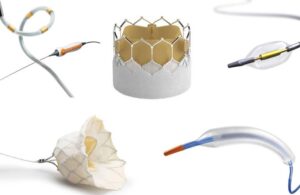
These companies develop a range of cardiovascular therapeutics, devices and systems. Those include replacement heart valves, heart pumps, drug-eluting implants, renal denervation (RDN) systems and more.
Last year’s TCT event highlighted some significant trends in the cardiovascular space, following up on the previous year’s developments.
Several companies reported positive study results and significant advances for their platforms at TCT 2025 this time around. Here are the biggest stories out of this year’s edition.
Medtronic has multiple studies backing its Symplicity Spyral RDN
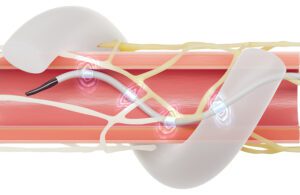
Symplicity Spyral delivers radiofrequency energy to nerves near the kidneys in a minimally invasive procedure to treat hypertension. These nerves can become overactive and contribute to high blood pressure. The RDN system holds approval for commercial use in more than 80 countries. Medtronic received a landmark approval for the system in November 2023.
SPYRAL HTN-ON MED demonstrated the consistent and durable effects of the Symplicity blood pressure procedure, with the most long-term data presented and published to date.
In the data shared for SPYRAL AFFIRM, investigators saw significant, safe and sustained blood pressure reductions with the RDN system. This occurred with no increase in anti-hypertensive medication use at six months.
Read the full SPYRAL HTN-ON MED story here.
Read the full SPYRAL AFFIRM story here.
Impella study, new guidelines boost J&J MedTech at TCT 2025

Impella CP, the world’s smallest heart pump, is inserted into the heart to temporarily take over the heart’s pumping function. It allows the heart to rest and recover while maintaining the flow of oxygenated blood throughout the body.
Findings from DanGer Shock include an absolute mortality reduction of 16.3% compared to standard care at 10 years. On average, Impella CP patients gained approximately 600 additional days alive at 10 years.
J&J MedTech also shared that its evidence led to upgraded recommendations for Impella in recent multi-society guidelines. The guideline updates, which include ACC/AHA, cover the treatment of cardiogenic shock patients. They come on the back of evidence from the DanGer Shock trial.
Boston Scientific’s Agent drug-coated balloon performs well in study

Agent serves as an alternative to traditional therapies like balloon angioplasty, additional layers of stenting or radiation. The paclitaxel-coated balloon transfers a therapeutic dose of drug to the vessel wall, helping to prevent in-stent restenosis (ISR) reoccurrence. The FDA approved the balloon in March 2024.
First, an observational, prospective, non-randomized, multi-center registry used real-world data from the CathPCI registry. It evaluated more than 12,000 patients treated with the Agent DCB during a 2-year enrollment period (April 2024-June 2025). The study took place across more than 700 U.S. sites.
Boston Scientific also reported findings from the ALLIANCE registry looking at 1,800 Agent patients in Japan. It assessed the safety and effectiveness of Agent for real-world PCI. Patients received either standalone DCB or a hybrid drug-eluting stent and DCB strategy.
Edwards touts multiple studies for its heart valves at TCT 2025

Seven-year data from the PARTNER 3 trial reaffirmed the early and sustained patient benefits of Edwards’ transcatheter aortic valve replacement (TAVR) system. Data outlined superior clinical outcomes at one year, too, and demonstrated strong long-term valve performance and durability.
Separately, 10-year results from PARTNER 2 intermediate risk studies reinforced the company’s valve’s lasting performance and outcomes across all risk profiles and generations.
Edwards also shared one-year data from the ENCIRCLE single-arm pivotal trial and 30-day data from the EVOQUE STS/ACC TVT registry.
Read about long-term TAVR results here.
Read about the Evoque and Sapien M3 results here.
Abbott has positive results for its Tendyne mitral valve replacement

Tendyne offers an option for patients with mitral valves that fail to function properly due to severe mitral annular calcification (MAC). MAC stiffens the annulus ring-like structure that supports the mitral valve. This can lead to mitral regurgitation or stenosis, disrupting the heart’s ability to effectively pump blood.
Some patients with severe MAC at high risk for open-heart surgery can’t have their valve repaired with Abbott’s MitraClip. For this population, Tendyne delivers an alternative, minimally invasive way to replace the leaky (mitral regurgitation) or narrowed (stenosis) valve.
Findings from the SUMMIT-MAC pivotal trial were shared at TCT 2025, marking the first prospective, multi-center trial evaluating the system’s safety and effectiveness with core-lab adjudication and prespecified endpoints.
FastWave Medical reports first-in-human findings for Sola laser IVL system

Minneapolis-based FastWave designed Sola to treat cardiovascular calcium with sleek, rupture-resistant balloon catheters. Its custom laser energy source produces actuating, circumferential sonic pressure waves. Sola enables improved operator control to safely and effectively modify calcium.
FastWave’s study for which results were shared at TCT 2025 evaluated Sola in patients with complex calcified coronary lesions. The first-in-human results demonstrated the safety, efficacy and procedural success of the next-generation system.
Primary endpoints include 30-day major adverse cardiac events (MACE, defined as cardiac death, myocardial infarction or target-vessel revascularization) and procedural success, defined as successful stent delivery with <50% residual stenosis and no in-hospital MACE.
Recor Medical shares positive renal denervation data at TCT 2025
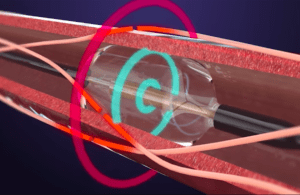
Recor Medical received a landmark FDA nod for its Paradise system in November 2023. It also holds CE mark. The first-of-its-kind Paradise technology denervates the sympathetic nerves surrounding the renal arteries. This lowers blood pressure by reducing the overactivity that can lead to hypertension.
At TCT 2025, the company announced results from two clinical studies evaluating its Paradise ultrasound renal denervation (uRDN) system.
Recor shared findings from its Global Paradise System (GPS) registry and a pooled analysis of data from its RADIANCE global clinical trial program. The positive data presentation comes just days after the company picked up a significant Medicare win as well.
The rest of the big stories out of TCT 2025
- Medtronic launches new guidewire to support TAVR procedures
- Philips study backs immediate narrowed artery treatment in heart attacks
- Philips unveils new cath lab data integration platform for Azurion
- Anteris reports positive biomimetic heart valve study results
- Surmodics reports real-world Pounce thrombectomy system findings
- Study shows significant risk reduction with Elixir Medical bioadaptor
- Penumbra study backs mechanical thrombectomy for treating pulmonary embolism
- Multiple studies back Cordis Selution SLR drug-eluting balloon
- Venus Medtech’s Cardiovalve completes enrollment in tricuspid valve replacement trial