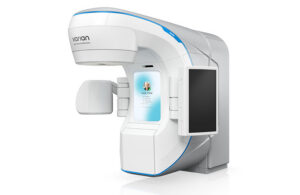
The Varian Accela radiotherapy system is built around the company’s NeoArc dynamic modulated arc therapy, or DMAT, which employs a faster gantry and dose rate along with a 186-leaf collimator for precise beam shaping.
The company said it can deliver multi-site stereotactic body radiation therapy in as little as 60 seconds and comes equipped with artificial intelligence programs for treatment mapping. In addition, its HyperSight cone-beam CT can acquire single-breath scans in 15 seconds, narrowing the time from imaging to radiation to as low as 90 seconds and reducing the window for patient movement to impact accuracy.
“Accela is the kind of leap our field doesn’t see often,” said Dr. Dee Khuntia, chief medical officer of Siemens Healthineers’ Varian unit. “It’s faster than previous systems, it’s built on a fundamentally modern architecture, and it introduces a generational shift in treatment planning.”
Siemens Healthineers made the announcement at the annual meeting of the American Society for Radiation Oncology in Boston. The system is currently pending an FDA clearance and is not yet commercially available.
Related: Siemens Healthineers and Cleveland Clinic announce new 10 year alliance
The company said the platform was developed through a years-long international collaboration, including partners at the Mayo Clinic, Washington University School of Medicine Siteman Cancer Center, University Hospital Zurich, Seidman Cancer Center at University Hospitals Cleveland Medical Center, Maastro – Maastricht Radiation Oncology Institute, Mass General Brigham Cancer Center, and Memorial Sloan Kettering Cancer Center.
According to Dr. Lauren Henke, director of the gastrointestinal radiation oncology service at University Hospitals/Case Western Reserve University, a clinical trial of patients receiving mock radiation therapy found Accela and DMAT reduced delivery times for abdominal SBRT by 87%.
“With current technologies, metastasis-directed radiotherapy takes 30-60 minutes per site for treatment,” Henke said in a statement. Multiplied by 10 sites, “it is really challenging for a patient to spend that much time getting treatment per day, and hard for clinics to keep up with demand.”