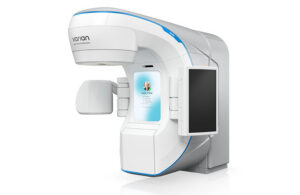
The two aim to embed AI agents in the treatment planning process, with the goal of personalizing radiotherapy delivery to tumors and avoiding damage to healthy tissues.
“To put it simply, these efforts are centered on helping providers manage complexity more seamlessly, make more informed decisions about treatment options, and ultimately spend more time on patient care,” Siemens Healthineers CEO Bernd Montag wrote in a LinkedIn post on the initiative. “For us, that’s where the promise of AI becomes real.”
The effort will also look to incorporate digital twins of patients to model treatment scenarios, as well as apply additional computing power during the procedure itself.
According to Nvidia, this will include the use of its Nemotron open foundation models for agent development, in addition to dose-calculation software and its Holoscan platform for real-time sensor data to help adapt the therapy to a particular patient.
“We’ve made important advances in precision and adaptation — most recently, with the launch of the Accela system,” said Arthur Kaindl, head of Siemens Healthineers’ Varian cancer-care business, referring to the single-breath radiotherapy platform the company unveiled last month.
“Our collaboration with NVIDIA builds on that progress, exploring how AI and real-time computing could give clinicians greater speed and insight to make informed decisions, adapt treatment with greater confidence and deliver personalized care to more patients,” Kaindl added.
Related: Siemens Healthineers wins FDA clearance for 6 new interventional imaging systems
Nvidia said it is also developing projects with multiple life sciences companies tasked with AI-driven drug and protein design, as well as laboratory automation. They include Automata, Benchling, Biolevate, Boltz, Danaher, Genedata, Halogen and Therna Biosciences.
The company will also work with the University of Washington’s Institute for Protein Design, to roll out its RFD4-Proteina model for parsing binding sites and enzyme scaffolding.
“We are moving from an era of discovering the proteins nature has made to one in which we can design entirely new ones,” said David Baker, director of the UW institute and one of the winners of the 2024 Nobel Prize in chemistry for his work in computational design.
“RFD4-Proteina expands what scientists can create, from proteins that could advance drug discovery to enzymes that break down pesticides,” Baker added. “Making the model open will allow researchers around the world to build on these capabilities and pursue solutions once beyond the reach.”
Nvidia has also been working on a separate collaboration with the elder Siemens AG, the medtech’s corporate parent, to bring AI solutions to its industrial electronics and printed circuit board manufacturing plant located in Siemens Healthineers’ hometown of Erlangen, Germany.
Earlier this year, Nvidia launched an open-source simulation program for surgical robot developers to help model interactions between instruments and anatomy, including flexible hardware like catheters and guidewires as well as simulated X-ray imaging.