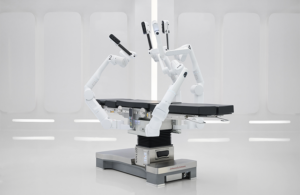
At the event, the world’s biggest names in surgical robotics shared new innovations and milestones that showcase the ever-growing nature of the surgical robotics space.
With many topics covered, AI once again took center-stage, with a number of leaders demonstrating their use of the technology and how it can advance the field of surgical robotics.
Elsewhere, the surgical robotics world continued to move forward during SRS. That included landmark regulatory milestones and significant fundraising rounds. However, we also saw the fickle nature of the world of surgical robotics, with a one-time exciting player ceasing operations.
For the biggest news that came out last week, both at and during SRS 2026, read more:
Johnson & Johnson wins FDA nod for Ottava
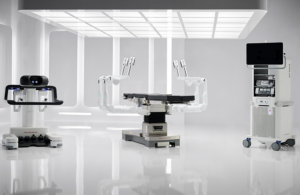
Authorization covers multiple procedures across general surgery, including Roux-en-Y gastric bypass, gastrectomy, cholecystectomy, splenectomy, gastric sleeve, small bowel resection, appendectomy, lysis of adhesions, fundoplication, and hiatal hernia repair.
The medtech giant’s leaders hope its soft-tissue platform will challenge longtime leader Intuitive Surgical’s da Vinci system. It also marks the second major surgical robot approval within the last year, as Medtronic’s Hugo also got an FDA nod for urologic procedures in late 2025.
Ottava incorporates four robotic arms into a standard-size surgical table. Its unified architecture allows for an invisible design, J&J says. The robotic arms are available when needed and stowed beneath the surgical table when not. It occupies 30–50% less space than traditional boom- and cart-mounted systems, the company says.
Read more about Ottava’s FDA authorization.
Read our interviews with J&J officials at MassDevice and Medical Design & Outsourcing.
Medtronic unveils new AI computing platform for surgical robotics
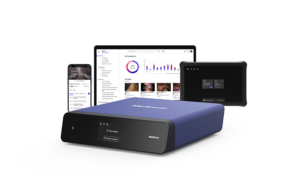
Touch Surgery Aide, an AI-native surgical computing platform, powers the company’s Touch Surgery ecosystem. Medtronic’s Touch Surgery ecosystem powers the company’s robotic surgery platforms, which include the Hugo robot. The platform enables real-time AI use during procedures.
Medtronic’s Touch Surgery aims to connect the entire surgical journey. It bridges pre-operative planning and training, intra-operative telemonitoring and teleproctoring and AI-powered post-operative insight. Medtronic says it simplifies workflows and extends access beyond the individual operating room.
The medtech giant’s new Touch Surgery Aide expands the ecosystem with next-generation computing capabilities. It enables multimodal AI-driven support during surgery to deliver actionable insights during procedures. The solution also supports case review and helps inform continuous improvement in clinical decision-making.
Read more about the new Medtronic technology.
Intuitive showcases AI for surgical robotics, telesurgery capabilities
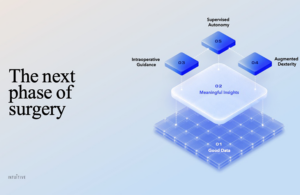
The company said it aims to utilize AI to improve surgical care by reducing variability, improving outcomes, shortening learning curves, and ultimately expanding surgeon reach. It hopes to achieve this while maintaining the highest standards of patient safety and surgeon control. The company’s structured approach to AI development utilizes real-world experience and outcomes from a global dataset of more than 20 million da Vinci procedures.
According to Intuitive, its approach utilizes five layers. It starts with good data, followed by meaningful insights, intraoperative guidance, augmented dexterity and supervised autonomy. AI provides precision and control, expanding surgeon capabilities while preserving accountability and control, Intuitive says.
The company’s novel surgical AI framework moves beyond visual recognition, it says. Its dataset, built from surgical videos, goes beyond what takes place in the operating field to capture the reasoning behind clinical choices.
Intuitive added to this latest milestone with a new collaboration with legendary athlete and coach Deion Sanders, with whom the company aims to raise awareness around surgical options.
Read more about the latest developments at Intuitive.
Vicarious Surgical shuts down to liquidate assets
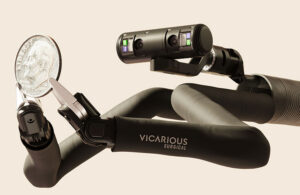
On July 21, Vicarious Surgical investors voted to shut down and liquidate the surgical robotics developer immediately. The Vicarious Surgical board unanimously proposed the closure and liquidation to investors last month, saying it could not predict whether there would be anything left to repay investors as cash flow continued to diminish after a special purpose acquisition company (SPAC) merger in 2021.
Now, medical device OEMs have signed nondisclosure agreements to access the company’s data room while Vicarious Surgical assets are auctioned off.
Vicarious designed its robotic technology to increase the efficiency of surgical procedures. It aims to enhance freedom of movement, improve visualization in the surgical field and push the boundaries of minimally invasive robotic-assisted surgery with a single incision. However, the company’s development efforts hit a series of snags along the way, and the company failed to get its R&D program to a design freeze, which CEO Stephen From hoped to achieve by the end of 2026.
Read more about what’s next for Vicarious Surgical.
Nvidia unveils open-source simulation framework for surgical robotics

The cloud computing giant unveiled its Nvidia Medical Physics Simulation framework, a new capability with its Isaac for Healthcare platform, at SRS 2026. It aims to help medical robotics developers model anatomy-device interaction, generate hard-to-capture scenarios, test in silico, and train or evaluate robot policies before hardware-heavy testing.
Nvidia says its framework brings together anatomy and medical device behavior with sensor simulation and robot learning. It helps teams create reusable simulation environments instead of rebuilding custom scenes for every workflow.
The company said the open-source element helps robotics developers inspect the framework and adapt it to their own devices and workflows. Then, they can build on a GPU-accelerated foundation that works seamlessly with the broader Nvidia stack.
Read more about Nvidia’s latest advancement in surgical robotics.
CMR Surgical, Nvidia showcase predictive surgical robotic capabilities
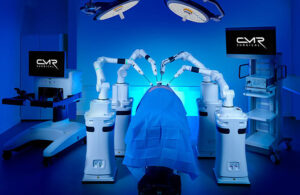
The Cambridge, UK-based company labels this advance as a “new paradigm of simulation in surgical robotics. It said the demonstration shows Versius Plus when trained to learn from clinical experience to predict how the future surgical environment could evolve under different actions.
Versius became the first multi-port, soft tissue general robotic-assisted surgical device to gain clearance through the FDA’s de novo process in 2024. CMR added FDA clearance for its next-generation Versius Plus system in cholecystectomy in December 2025.
Leveraging Versius Plus, CMR Surgical said the new capabilities make it the largest contributor to Open-H Embodiment, the world’s largest open dataset for healthcare robotics.
Read more about what CMR Surgical and Nvidia are doing.
Other noteworthy surgical robotics stories that came out during SRS 2026
- Moon Surgical, Karl Storz collab on surgical robotics, visualization tech
- Sentante brings endovascular physical AI to surgical robot
- FDA clears Momentis Surgical’s multiport surgical robot
- EndoQuest Robotics completes enrollment in surgical robot trial
- Magnendo raises $18M Series A led by Penumbra to support magnetic endovascular robotic tech
- Remote ultrasound robot developer Dopl raises $6M seed round