The medtech giant said investigators presented findings at the annual meeting of the European Heart Rhythm Association (EHRA) in Vienna, Austria. Outcomes showed that the dual-energy catheter proved 86.9% effective when treating patients with high adherence to recommended ablation parameters.
Other findings included a significant reduction in total antiarrhythmic drug (AAD) use observed. Investigators saw a clinically meaningful improvement in quality of life and reduced healthcare utilization, too. The data adds to results from the SmartfIRE clinical trial presented in April 2024.
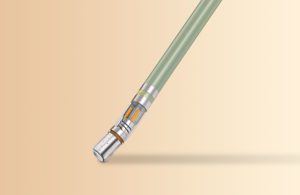
Johnson & Johnson MedTech’s irrigated, contact-force sensing catheter features alongside the TruPulse generator. Both offer full integration with the Carto 3 electro-anatomical mapping system. It marks the first dual-energy pulsed field ablation (PFA)/radiofrequency (RF) ablation catheter integrated with a PF and RF ablation index. With CE mark received in December 2024, the catheter remains investigational in the U.S.
At 12-month follow-up, findings included 71.5% freedom from recurrence with protocol-required stringent monitoring. This increased to 86.9% among patients treated with high adherence to the recommended ablation workflow. Johnson & Johnson also reported a 3.6% serious adverse device effects rate, with none related to PF energy. The study saw a 40.8% relative reduction in CV-related hospitalizations compared to baseline and a 60.4% relative reduction in Class I/III AAD use compared to baseline.
“With an efficacy rate of 86.9% with high adherence to the recommended ablation protocol leveraging the PF & RF Tag Index, the 12-month SmartfIRE data supports the effectiveness, safety, and clinical benefits of ablation performed with the Dual Energy ThermoCool SmartTouch SF catheter,” said Dr. Tom De Potter, head of EP and associate director of the Heart Center at OLV Hospital in Aalst, Belgium.
Johnson & Johnson has more data at EHRA
The company also reported real-world evidence from its sponsored REAL AF registry. The database of 68 centers investigated real-world safety and effectiveness for catheter ablation procedures, health outcomes, research, and the future of electrophysiology practice.
Data from REAL AF included those examining gender differences in ablation strategies in outcomes. It also featured outcomes with zero-fluoroscopy vs. conventional approaches.
Johnson & Johnson MedTech says it aims to support additional studies with its ThermoCool SmartTouch SF catheter, plus investigator-initiated collaborative studies. Investigators enrolled the first patients in the GPfIRE study evaluating the impact of PF energy. It looks at PF energy alone and in combination with RF energy on vagal modulation after pulmonary vein isolation (PVI) in paroxysmal AFib. De Potter performed the study’s first cases in Belgium.
“At Johnson & Johnson MedTech, we recognize that advancing patient care requires strong collaborations and rigorous clinical research. By supporting studies like GPfIRE, we are committed to generating robust clinical evidence, especially for pulsed field ablation, that not only informs treatment decisions but also drives innovation in AFib care. Our goal is to empower clinicians with the insights needed to enhance workflows and optimize patient outcomes,” said Jennifer Currin, VP, Scientific Affairs, Johnson & Johnson MedTech.