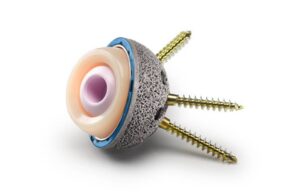
Warsaw, Indiana-based Zimmer Biomet designed the next-generation implant to address challenging primary and revision hip replacements. The company built it on its G7 platform, combining trabecular metal technology with an anatomic screw-hole pattern. It features Rim Fix screws and perimeter holes designed to provide multiple points of access and engagement to help surgeons achieve stable fixation in compromised bone.
According to Zimmer Biomet, the G7 shell’s trabecular metal porous surface is made from elemental tantalum. It has structural, functional and physiological properties similar to bone. The material features a 100% open, engineered and interconnected pore structure. This supports biological fixation and vascularization.
G7’s shell also incorporates strategically placed anatomic dome screw holes that align with patient anatomy. Zimmer Biomet says this function maximizes shell fixation. The company guided the placement of the holes with its custom anatomical modeling system, ZiBRA. This platform utilizes a large database of 3D reconstructed bone scans to represent a diverse global population.
Zimmer Biomet said preclinical testing of the rim fix screws demonstrated reduced micromotion and increased initial construct stability. The company also made the system compatible with multiple G7 liners to establish a stable joint in total hip arthroplasty.
According to a news release, the company plans to begin a full commercial launch for G7 by the end of the first quarter.
“FDA clearance of the G7 Acetabular System marks an important milestone for our hip portfolio and our commitment to advancing solutions for complex procedures,” said Lou Galrao, president of Reconstruction at Zimmer Biomet. “By integrating trabecular metal technology with anatomic screw holes and rim fix screws, we’re delivering a system designed to help surgeons address difficult cases while maintaining compatibility with the full G7 ecosystem.”