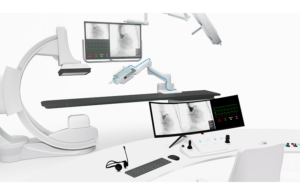
In April, the St. Louis–based company announced an agreement to acquire the French surgical robot maker. The deal featured an upfront payment of $20 million and additional contingent payments of up to $25 million tied to regulatory and commercial milestones. Those include FDA clearance of the company’s next-generation robotic technology.
Robocath develops robotic technologies for interventional cardiology and neurointerventions. The company holds CE mark and other regulatory approvals for its first robotic solution, the R-One system, currently used in Europe, Africa and China. It launched a first-in-human study for the second-generation robotic system in January.
The portfolio at Stereotaxis already includes surgical robotic technology, with the next-generation magnetic GenesisX surgical robot. It’s vying for a place in the endovascular robotic space that includes Microbot Medical, XCath, Remedy Robotics and Sentante.
Now, the company plans to fully integrate Robocath into its portfolio, combining complementary technologies and expertise. It hopes to accelerate the development of next-generation robotic solutions for electrophysiology, interventional cardiology, and neurointerventions.
More about the Robocath and Stereotaxis technology
Robocath’s next-generation technology integrates capabilities designed to meet the increasing demands of complex coronary procedures. The company develops robotic solutions that utilize bionic technology aimed at optimizing the safety of robotic-assisted coronary angioplasty.
The platform revascularizes the cardiac muscle through the implantation of one or more stents to arteries supplying blood. Robocath designed its robotic technologies to operate with precision and perform accurate movements to create better interventional conditions. The system also enables the simultaneous manipulation of up to five interventional devices.
According to Stereotaxis, the combination of its magnetic navigation technology with Robocath’s mechanical robotic system creates a differentiated, fully robotic solution for endovascular surgery.
Stereotaxis uses precise, computer-controlled magnetic fields to enable navigation of the distal tip of interventional devices. Robocath’s platform offers multi-device control at the bedside. Together, the companies expect a synergistic approach to improving procedural precision, efficiency and outcomes.
(Learn more about the surgical robotics space in our MassDevice Surgical Robotics Special Report. Download the report for free here.)
Commentary from Stereotaxis and Robocath leadership
David Fischel, Stereotaxis chair and CEO, said:
“The addition of Robocath’s technology and team to Stereotaxis accelerates our strategy, enhances our technological leadership, provides attractive commercial synergies in an expanded addressable market, and supports new strategic opportunities.”
Philippe Bencteux, Robocath founder and CEO, said:
“We’re very excited to join Stereotaxis. Combining the strengths, expertise, and technologies of two pioneers in endovascular robotics, we now have the opportunity to accelerate innovation, expand our global reach, and bring robotic solutions to many more physicians and patients around the world.”