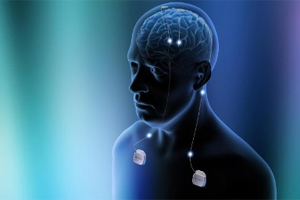
A deep brain stimulation implant made by St. Jude Medical’s (NYSE:STJ) proved effective in the treatment of patients Parkinson’s disease, according to results published in The Lancet.
The 136-patient study compared patients suffering from Parkinson’s who were implanted with St. Jude’s Libra and LibraXP DBS systems with and without stimulation. The study enrolled patients who had suffered from Parkinson’s for at least 5 years, or who had 6 hours a day with diminished motor symptom control and muscle ticks.
Patients receiving stimulation had a 39% improvement in the motor scores when compared to the Unified Parkinson’s Disease Rating Scale.
Sign up to get our free newsletters delivered straight to your inbox
Stimulated patients reported good control of motor functions and an overall improvement in quality of life. They also used used significantly less symptom-managing medication when compared to the group that didn’t receive stimulation.
" The data from this study represents the evolution of the approach to deep brain stimulation treatment and provides new evidence supporting the positive benefits this therapy can provide patients," Dr. Michael Okun, primary author and national medical director of the National Parkinson Foundation said in prepared remarks.
The Libra and LibraXP are constant current neurostimulatiors currently approved for the management of Parkinson’s disease in Europe, Latin America and Australia.
The system is made of up a surgically implanted neurostimulator that generates mild electrical pulses and is connected to leads that carry the pulses to the targeted areas in the brain.
The Libra system showed reduced symptoms among patients suffering from treatment-resistant depression, in the results of a pilot study published in November.
The St. Paul, Minn.-based health care giant’s Broaden study landed FDA approval under an investigational device exemption to study stimulation in Brodmann Area 25 to determine whether it is a safe and effective treatment for severe depression.
Med-tech titan Boston Scientific Corp. (NYSE:BSX) is also deep into the neurostimulation and neuromodulation business, developing products for the treatment of hemorrhagic stroke, intracranial athero disease, and acute ischemic stroke. Medtronic Inc. (NYSE:MDT) launched its Activa device for the treatment of Parkinson’s disease earlier this year, after winning CE Mark approval in the European Union for it’s deep-brain stimulator for treatment of epilepsy last fall.
The study’s positive results are welcome for St. Jude after the medical device giant was downgraded to "Hold" from "Buy" by Jeffries analyst Raj Denhoy last month.
The downgrade was largely due to an announcement by the St. Paul, Minn.-based company that its Riata defibrillator leads, which came off the market in 2009, had a higher failure rate than previously estimated.
St. Jude bounced back earlier this week, however, when shares jumped nearly 5% in early trading on Wall Street as the St. Paul, Minn.-based cardiac device maker said it was likely to meet its previously stated earnings guidance for the fourth quarter of 2011.