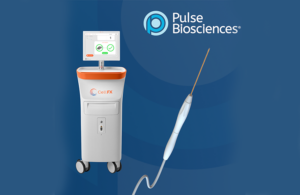
nPulse uses proprietary nanosecond pulsed field ablation (nsPFA) energy to deliver a complete circumferential lesion in a single, brief energy application without the need to stack lesions. It also eliminates the need to stop, rotate and reposition the catheter.
The system features a percutaneous electrode system, which the FDA cleared in 2025. It enables the ablation of soft tissue in percutaneous and intraoperative surgical procedures. The company also picked up IDE for its Cardiac Clamp in September 2025.
Pulse Biosciences also recently announced a shift in organizational focus toward its PFA platform. It wants to prioritize and accelerate the development and future commercialization of nPulse.
Hayward, California-based Pulse Biosciences shared findings from its first-in-human feasibility study at Heart Rhythm Society (HRS) 2026 in Chicago.
Results included sustained 100% procedural success of evaluable patients by Holter monitor at six months (95/95). Investigators reported 96% procedural success of evaluable patients by Holter at one year (51/53). Additionally, they saw sustained 90% Kaplan-Meier estimate of freedom from AFib/atrial flutter/atrial tachycardia at one year.
Pulse Biosciences reported consistently efficient procedural performance and a strong safety profile. nPulse maintained a low serious adverse event rate, with 1.7% (3/177) of subjects experiencing a serious adverse event related to the primary safety endpoint.
The company said its results demonstrated durable pulmonary vein isolation and consistent procedural performance.
Commentary from Pulse Biosciences officials and investigators
Dr. David Kenigsberg, chief medical officer of Pulse Biosciences, said:
“Our Cardiac Catheter continues to demonstrate durable pulmonary vein isolation with highly consistent long-term outcomes and an efficient procedural workflow. The procedural efficiency we are seeing across 12 months of follow-up well exceeds my expectations, and reinforces the potential of nsPFA technology to meaningfully advance the field of atrial fibrillation ablation.”
Dr. Vivek Reddy, director of cardiac arrhythmia services at the Mount Sinai Fuster Heart Hospital, said:
“These 12-month results are genuinely impressive. The durability of pulmonary vein isolation combined with the procedural efficiency we’re seeing is not something we typically expect together at this stage of development. The consistency across patients and sites is particularly striking.”