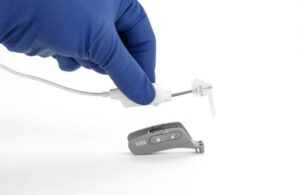
The iotaSoft insertion system enables precise and controlled electrode array insertion during cochlear implant surgery. St. Paul, Minnesota-based IotaMotion says it standardizes a critical, delicate step of this type of procedure. In doing so, the robotic-assisted technology helps to preserve delicate cochlear structures, the company says.
Now, iotaSoft has FDA clearance for use in patients four years of age and older. The clearance extends access to robotic-assisted cochlear implantation for school-aged children. Cincinnati Children’s Hospital became the first dedicated pediatric center to adopt the system. It joins more than 35 cochlear implant centers across the U.S.
IotaMotion cites a study published in The Laryngoscope that showed that 85% of patients receiving robotic-assisted cochlear implant insertion maintained hearing preservation at one year. This compared to 71% in the manual insertion group.
“Robotic assistance in cochlear implantation is about precision and consistency,” said Dr. Marlan Hansen, IotaMotion co-founder and chief medical officer. “With the expanded pediatric indication for iotaSoft, supported by growing clinical evidence, families can have greater confidence that controlled, standardized insertion is designed to protect the cochlea and preserve its structure and function. This is especially important for children who may benefit from emerging therapeutic advances, including gene-based and regenerative hearing technologies, which will likely depend on atraumatic, cochlear implant array placement early in life.”