• Skip to primary navigation
  • Skip to main content
  • Skip to primary sidebar
  • Skip to footer

MassDevice

The Medical Device Business Journal — Medical Device News & Articles | MassDevice

  • Special Reports
  • Technologies
    • Artificial Intelligence (AI)
    • Cardiovascular
    • Orthopedics
    • Neurological
    • Diabetes
    • Surgical Robotics
  • Business & Finance
    • Wall Street Beat
    • Earnings Reports
    • Funding Roundup
    • Mergers & Acquisitions
    • Initial Public Offering (IPO)
    • Legal News
    • Personnel Moves
    • Medtech 100 Stock Index
  • Regulatory
    • Food & Drug Administration (FDA)
    • Recalls
    • 510(k)
    • Pre-Market Approval (PMA)
    • MDSAP
    • Clinical Trials
  • Resources
    • About MassDevice
    • Leadership in Medtech
    • Manufacturers & Suppliers Search
    • MedTech100 Index
    • Videos
    • Webinars
    • Whitepapers
    • Voices
    • In-Depth Coverage
    • Latest News
  • Attend DeviceTalks
    • Events
      • DeviceTalks Minnesota – May 4
      • DeviceTalks Boston – May 27–28
      • DeviceTalks West
      • DeviceTalks Tuesdays
    • DeviceTalks Podcast Network
      • DeviceTalks Weekly
      • AbbottTalks
      • Boston ScientificTalks
      • DeviceTalks AI
      • IntuitiveTalks
      • MedtechWOMEN Talks
      • MedtronicTalks
      • Neuro Innovation Talks
      • Ortho Innovation Talks
      • Structural Heart Talks
      • StrykerTalks
  • Advertise
  • Subscribe
Home » Philips Seismic consortium picks up $28M for next-gen brain treatments

Philips Seismic consortium picks up $28M for next-gen brain treatments

February 11, 2026 By Sean Whooley

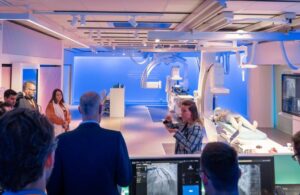
Seismic consortium kick-off Philips (1)
The Seismic kick-off event hosted in Best, the Netherlands. [Image courtesy of Philips]
Philips (NYSE: PHG) announced today that the Seismic research consortium received nearly $28 million (€23.5 million) in funding.

The consortium, coordinated by Philips with Erasmus MC as academic lead, received funding from the Innovative Health Initiative (IHI). This award aims to enable the transformation of neurosurgery. The consortium hopes to enable the integration of minimally invasive surgical techniques and advanced imaging technologies.

Along with the $28 million award, industry partners pledged an additional $17.7 million (€14.9 million). This includes in-kind contributions and additional resources. Altogether, this award supports a five-year research and innovation program that also includes eight clinical studies.

The Seismic public-private partnership comprises nine medical technology industry partners, two patient organizations and seven academic partners. It aims to alleviate the burden of neurological conditions and address urgent minimally invasive treatment needs.

“The shift from open brain surgery to minimally invasive procedures, supported by advanced imaging and precision navigation, holds tremendous potential to improve patient care,” said Bert van Meurs, chief business leader for Image Guided Therapy at Royal Philips. “It’s a major undertaking and through Seismic, we’re bringing together the necessary medical specialties, technology domains and patient perspectives to help break down the barriers to this transition. By combining precision surgical techniques with real-time imaging and intelligent decision support, our goal is to simplify complex procedures, improve outcomes and broaden access to advanced neurosurgical care across Europe and beyond.”

More about the Seismic consortium coordinated by Philips

Neurological conditions targeted by Seismic include severe conditions like bleedings deep in the brain (hemorrhagic stroke), chronic bleeding between the skull and the brain (subdural hematoma) and brain tumors are a leading cause of ill health, disability and overall disease burden globally. The consortium also hopes to address socioeconomic costs impacted by these conditions.

Seismic aims to transform potentially high-risk neurosurgical procedures into safer, faster and more accessible interventions.

The consortium intends to develop an integrated suite of technologies, including real-time surgical navigation. This combines ultrasound guidance with live X-ray imaging, plus highly realistic simulation platforms and minimally invasive biopsy and treatment techniques.

Techniques under consideration include a single, image-guided procedure for subdural hematoma. This utilizes hematoma drainage with embolization of the middle meningeal artery. For brain tumor diagnosis, the consortium plans to look at minimally invasive, focused ultrasound-enhanced liquid biopsy.

To treat brain tumors, Seismic will assess cryoablation, introducing a probe through a small skull opening and guiding it to the tumor using X-ray and ultrasound imaging.

“The brain is extraordinarily complex and delicate. It defines who we are, including our intelligence, personality, and consciousness.  Operating on the brain remains one of the greatest challenges in modern medicine, as the margin between helping and harming a patient can be extremely small,” said Pieter Kruizinga, researcher at Erasmus MC and academic lead of the Seismic consortium. Seismic is about shifting that balance in the right direction by making neurosurgical procedures less invasive, more precise, and better supported by real-time imaging, data, and training.

“By bringing these elements together, we aim to improve outcomes for patients and enhance the way neurosurgeons work.”


Filed Under: Business/Financial News, Clinical Trials, Funding Roundup, Health Technology, Imaging, Neurological, Oncology, Software / IT, Ultrasound Tagged With: Philips, Royal Philips

More recent news

  • Carlsmed names chief product and AI officer as it claims CMS reimbursements
  • Integra LifeSciences says Cincinnati plant flooding will cost millions
  • Mendaera rolls out handheld needle robot paired with Butterfly ultrasound probe
  • Edwards earns FDA approval for first-of-its-kind size-adjustable pediatric heart valve
  • Leading medical device experts and MDO launch Medtech Innovation Board

About Sean Whooley

Sean Whooley is a senior editor who mainly produces work for MassDevice, Medical Design & Outsourcing and Drug Delivery Business News. He received a bachelor's degree in multiplatform journalism from the University of Maryland, College Park. You can connect with him on LinkedIn or email him at [email protected].

Primary Sidebar

“md
EXPAND YOUR KNOWLEDGE AND STAY CONNECTED
Get the latest med device regulatory, business and technology news.

DeviceTalks Weekly

See More >
MDO ad
MDO ad

Footer

MASSDEVICE MEDICAL NETWORK

DeviceTalks
Drug Delivery Business News
Medical Design & Outsourcing
Medical Tubing + Extrusion
Drug Discovery & Development
Pharmaceutical Processing World
MedTech 100 Index
R&D World
Medical Design Sourcing

DeviceTalks Webinars, Podcasts, & Discussions

Attend our Monthly Webinars
Listen to our Weekly Podcasts
Join our DeviceTalks Tuesdays Discussion

MASSDEVICE

Subscribe to MassDevice E-Newsletter
Advertise with us
About
Contact us

Copyright © 2026 · Arrowfly LLC and its licensors. All rights reserved.
The material on this site may not be reproduced, distributed, transmitted, cached or otherwise used, except with the prior written permission of Arrowfly.

Privacy Policy