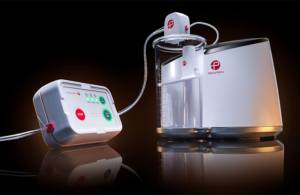
Thunderbolt expands the Alameda, California-based company’s computer-assisted vacuum thrombectomy (CAVT) portfolio. It aims to address acute ischemic stroke.
Penumbra said Thunderbolt represents a first-of-its-kind advancement in acute ischemic stroke. It currently stands as the only CAVT device available for stroke treatment in the U.S., the company said.
Powered by the company’s Engine platform, Thunderbolt introduces modulated aspiration to Penumbra’s neuro thrombectomy portfolio. It offers advanced CAVT technology designed to detect, fatigue and completely ingest clot at the site of the occlusion.
Thunderbolt will come pre-packaged with one of Penumbra’s catheters, including Red 62, Red 68, Red 72, Silver Label or Red 72 Silver Label with SENDit technology.
(Penumbra is also subject to a planned $14.5 billion acquisition by Boston Scientific. Read more about that here.)
Commentary from Penumbra officials and doctors using Thunderbolt
Shruthi Narayan, president of Penumbra, said:
“Penumbra was founded to redefine stroke care and Thunderbolt delivers on that promise. We are uniquely positioned as the only company offering CAVT technology across both vascular and neurovascular conditions — redefining blood clot care from head-to-toe. Penumbra has delivered more than two decades of innovation, and Thunderbolt marks the beginning of a new era in stroke management, one that we believe will fundamentally change outcomes for patients.”
Dr. Donald Frei, neurointerventional radiologist at Swedish Medical Center, Denver, said:
“Stroke is the second leading cause of death worldwide and with stroke, timing is critical. If the blood clot isn’t removed and the artery reopened quickly, patients can face severe disability or even death. What sets Thunderbolt apart is the innovative design which minimizes catheter manipulation and promotes safe, complete clot capture – quickly restoring blood flow to the brain and giving patients the best chance at recovery.”
Dr. David Fiorella, director of the Cerebrovascular Center at Stony Brook University Hospital, said:
“Modulated aspiration may facilitate more consistent and complete clot removal when used in conjunction with standard aspiration thrombectomy catheters. Our early experience with Thunderbolt within the context of the trial, suggests that this technology will meaningfully change how we approach stroke treatment, and could substantively improve outcomes in patients with emergent large vessel occlusion.”