• Skip to primary navigation
  • Skip to main content
  • Skip to primary sidebar
  • Skip to footer

MassDevice

The Medical Device Business Journal — Medical Device News & Articles | MassDevice

  • Special Reports
  • Technologies
    • Artificial Intelligence (AI)
    • Cardiovascular
    • Orthopedics
    • Neurological
    • Diabetes
    • Surgical Robotics
  • Business & Finance
    • Wall Street Beat
    • Earnings Reports
    • Funding Roundup
    • Mergers & Acquisitions
    • Initial Public Offering (IPO)
    • Legal News
    • Personnel Moves
    • Medtech 100 Stock Index
  • Regulatory
    • Food & Drug Administration (FDA)
    • Recalls
    • 510(k)
    • Pre-Market Approval (PMA)
    • MDSAP
    • Clinical Trials
  • Resources
    • About MassDevice
    • Leadership in Medtech
    • Manufacturers & Suppliers Search
    • MedTech100 Index
    • Videos
    • Webinars
    • Whitepapers
    • Voices
    • In-Depth Coverage
    • Latest News
  • Attend DeviceTalks
    • Events
      • DeviceTalks Minnesota – May 4
      • DeviceTalks Boston – May 27–28
      • DeviceTalks West
      • DeviceTalks Tuesdays
    • DeviceTalks Podcast Network
      • DeviceTalks Weekly
      • AbbottTalks
      • Boston ScientificTalks
      • DeviceTalks AI
      • IntuitiveTalks
      • MedtechWOMEN Talks
      • MedtronicTalks
      • Neuro Innovation Talks
      • Ortho Innovation Talks
      • Structural Heart Talks
      • StrykerTalks
  • Advertise
  • Subscribe
Home » Perfuze’s super-bore stroke catheter tops conventional, cyclic aspiration in bench study

Perfuze’s super-bore stroke catheter tops conventional, cyclic aspiration in bench study

September 24, 2026 By Conor Hale

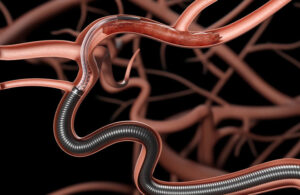
An illustration of Perfuze Millipede88 at the site of occlusion.
An illustration of the Perfuze Millipede88 at the site of occlusion.[Illustration courtesy of Perfuze]
Following FDA clearance earlier this year, Perfuze is putting forward new data comparing its super-bore aspiration catheter to conventional suction methods for removing stroke-causing blood clots, as well as the emerging approach of cyclic aspiration.

The three-way benchtop study of the company’s Millipede88 catheter, tested with in vitro models of large vessel occlusions, was described by researchers as the first of its kind to tackle emerging techniques in stroke care.

“Two new aspiration techniques arrived at once, and neither had been compared against the other under identical conditions,” said the study’s first author, Ameer Hassan, head of the neuroscience department at Valley Baptist Medical Center.

“In this model, getting more clot into the catheter only helped if the clot did not fragment on the way in,” Hassan said. “Super-bore aspiration gave the highest first pass effect and the highest final revascularization in both territories, and the fewest fragments escaping downstream in every clot type we tested.”

DeviceTalks: Perfuze CEO lays out the challenge – and the promise – of building a new stroke aspiration device

The Millipede88 was greenlit in the U.S. in March as the FDA’s first standalone 0.088-inch catheter for direct aspiration, according to the company.

In the study, it delivered 88% first-pass success in middle cerebral artery blockages, compared to 71% for conventional aspiration and 62% for cyclic aspiration with 0.071-inch catheters. Millipede88 also demonstrated an 82% rate of complete clot ingestion, versus 59% and 62%, respectively. The results were published in the journal Clinical Neuroradiology.
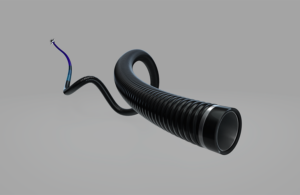
Perfuze Millipede 088 - Clot Ingestion catheter
The Millipede88 aspiration catheter [Image courtesy of Perfuze]
“Achieving first pass effect depends on how much lumen and flow you can bring to the face of the clot, and on the clot staying intact on the way in,” Galway, Ireland-based Perfuze CEO Wayne Allen, CEO said. “These findings are consistent with our clinical experience to date, and they capture something angiography does not show well, which is how much clot escapes downstream during retrieval.”

Ultimately, the super-bore catheter posted a 91% rate of final complete revascularization within three passes, in both middle cerebral artery and internal carotid artery models, topping the other methods’ results of about 80%.

Each technique was tested against 34 ovine clot analogs per arm, including soft, mixed and stiff blockages, with silicone representations of the iliofemoral, aortic arch and Circle of Willis anatomy and blood-mimicking fluid.

The company previously completed a clinical study for Millipede88 of more than 180 patients in the U.S. and Europe.

Last year, Perfuze secured an FDA clearance for its Zipline access catheter, alongside a $24 million fundraising. Millipede88 is currently being rolled out through a limited U.S. release in select comprehensive stroke centers, with a broader commercialization planned.

Filed Under: Business/Financial News, Cardiovascular, Catheters, Featured, Neurological, Regulatory/Compliance, Research & Development, Vascular Tagged With: catheter, Neurovascular, Perfuze, Stroke

More recent news

  • Perfuze’s super-bore stroke catheter tops conventional, cyclic aspiration in bench study
  • Edwards Lifesciences taps GE HealthCare vet to head new digital engineering group
  • Abbott partners with Berry Street to add nutrition coaching to Lingo
  • GE HealthCare taps retiring AT&T CFO for board of directors
  • Corcym delivers first-in-human implant of Memo 4D Curve mitral repair ring

Primary Sidebar

Cart

“md
EXPAND YOUR KNOWLEDGE AND STAY CONNECTED
Get the latest med device regulatory, business and technology news.

DeviceTalks Weekly

See More >
MDO ad
MDO ad

Footer

MASSDEVICE MEDICAL NETWORK

DeviceTalks
Drug Delivery Business News
Medical Design & Outsourcing
Medical Tubing + Extrusion
Drug Discovery & Development
Pharmaceutical Processing World
MedTech 100 Index
R&D World
Medical Design Sourcing

DeviceTalks Webinars, Podcasts, & Discussions

Attend our Monthly Webinars
Listen to our Weekly Podcasts
Join our DeviceTalks Tuesdays Discussion

MASSDEVICE

Subscribe to MassDevice E-Newsletter
Advertise with us
About
Contact us

Copyright © 2026 · Arrowfly LLC and its licensors. All rights reserved.
The material on this site may not be reproduced, distributed, transmitted, cached or otherwise used, except with the prior written permission of Arrowfly.

Privacy Policy