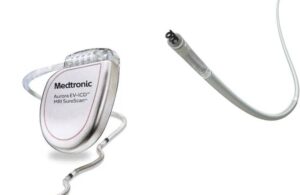
Researchers presented data from two studies at the Asia Pacific Heart Rhythm Society (APHRS) Scientific Session 2025 in Yokohama, Japan.
Six-month results from the Enlighten post-approval registry demonstrated success with the Aurora extravascular implantable cardioverter defibrillator (EV-ICD), while the final three-year results from the LEADR study reinforced the safety, efficacy and reliability of the medtech giant’s OmniaSecure defibrillation lead.
Enlighten showed high anti-tachycardia pacing (ATP) success and effective defibrillation with Aurora. The system also delivered a low rate of chronic, system-related major complications and a reduced inappropriate shock rate.
LEADR (Lead Evaluation for Defibrillation and Reliability), a pivotal trial, evaluated the small-diameter OmniaSecure lead. It looked at the lead used with traditional transvenous ICD or cardiac resynchronization therapy defibrillator (CRT-Ds), such as the Medtronic Cobalt and Crome family of ICDs/CRT-Ds.
“ICDs are the cornerstone for preventing sudden cardiac death for millions of people, but each patient’s needs may be different. For the majority of patients, the Aurora EV-ICD offers protection as the only ICD positioned outside the vascular space that also provides ATP in a single device,” said Trevor Cook, VP and GM, Defibrillation Solutions for the CRM business at Medtronic. “These technological innovations are revolutionizing the patient experience while protecting them from this deadly condition.”
A look at the Aurora EV-ICD data from Medtronic
Results from Enlighten came from 786 patients across 23 countries using Aurora EV-ICD. The device had high ATP success and effective defibrillation in a single device positioned safely outside the vascular space in a real-world population.
ATP delivers pacing pulses to the heart to terminate ventricular tachycardia (VT) and restore. the heart’s normal rhythm without a shock. In the study, the device avoided 44 shocks in 17 patients, delivering a termination rate of 67%. That fell in line with transvenous ICDs and with the EV-ICD pivotal trial.
Medtronic reported strong safety results, too, with 97.8% of patients free from chronic major system-related complications at six months. The system effectively treated 100% of spontaneous lethal arrhythmic episodes. Additionally, performance improved as 32% fewer patients experienced an inappropriate shock compared to the pre-market study.
Aurora provides the life-saving benefits of traditional ICDs with a lead placed under the sternum. It features Smart Sense technology that reduces oversensing, a common reason for inappropriate shocks. Medtronic won FDA approval for the system in 2023.
“The strong safety profile and consistent performance of the Aurora EV-ICD in real-world settings reinforces the benefit that patients are experiencing with a defibrillator outside of the vasculature that avoids unnecessary shocks,” said Dr. Ian Crozier, cardiologist at Christchurch Hospital in Christchurch, New Zealand, who presented the Enlighten data at the meeting. “These real-world outcomes confirm the results observed in the pivotal trial showing high defibrillation and ATP success, a low system-related major complication rate, and a reduced rate of inappropriate shocks compared to the Pivotal Trial. We look forward to continued follow up of these patients out to five years.”
A look at the OmniaSecure outcomes
LEADR results shared at APHRS confirmed continued high defibrillation efficacy, safety and reliability of the lumenless, small-diameter OmniaSecure defibrillation lead in traditional locations within the right ventricle. Findings come on the back of positive data shared in September for the lead.
Medtronic labeled OmniaSecure as the world’s smallest defibrillation lead, coming in at 4.7 Fr, or 1.6 mm. That equals about the diameter of graphite in a wooden pencil.
OmniaSecure connects to an implantable defibrillator to treat potentially life-threatening ventricular tachyarrhythmias, ventricular fibrillation (VT/VF) and bradyarrhythmias. Built on the company’s SelectSecure Model 3830 pacing lead for catheter delivery, it adds to the wide-ranging Medtronic portfolio of lead solutions for precise delivery and placement. The defibrillator lead won FDA approval for right ventricle placement in April.
In the latest LEADR results, OmniaSecure delivered high defibrillation success at implant (97.5%) and in the ambulatory setting through three years (95.3%). It had a low risk of complications, with 96.5% of patients free from a lead-related major complication.
OmniaSecure also exhibited reliable performance with a high ATP rate (75.4%), an appropriate shock delivery in 22.3% of aptients and a stable electrical performance. The lead also delivered high reliability, with a fracture-free rate consistent with the predicted 98.2% 10-year reliability modeling.