Besser took over as CEO when the company acquired ENvue Medical, where he also held the corner office, in June. In his letter to shareholders, he wrote that the company completed a comprehensive review of operations, technologies and market opportunities.
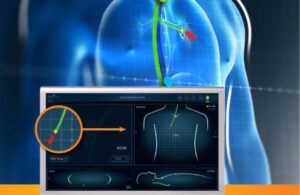
From this review, the company determined that its ENvue feeding tube placement system represents its “strongest and most scalable growth platform.” The FDA-cleared, commercially available system provides real-time anatomical navigation to guide enteral tube placements.
Earlier this year, NanoVibronix announced the development of ENvue Drive, a robotic system. It designed the platform to automate electromagnetic navigation for enteral and vascular access procedures at the bedside. The company views robotics and ENvue drive as a scalable foundation for its technologies as well.
“We believe that ENvue’s ability to deliver live guidance positions it as a modern solution in a large and growing market,” Besser wrote. “In the U.S. alone, the enteral feeding devices market is projected to reach approximately $1.8 billion by 2030, representing meaningful upside potential.”
Now, the company plans to adopt the name ENvue Medical, along with a new Nasdaq stock ticker.
“This rebranding marks a new phase for the company: one defined by precision enteral access, technology-driven growth and clinical excellence,” said Besser.
The new strategy at NanoVibronix
Besser wrote that the company now turns its focus to scaling hospital utilization, strengthening our commercial footprint and building a comprehensive enteral-feeding ecosystem around ENvue through both internal development and external business development opportunities.
New market opportunities include pediatric patients and pre-term infants, bringing ENvue to vulnerable populations. The company also plans to work toward X-ray navigation overlay with electromagnetic mapping. It also hopes to leverage its technology for peripherally inserted central catheter (PICC) lines and central-line placement in vascular access.
Finally, robotic tube placement achieved through automation and robotic guidance can improve accuracy. The company plans to continue toward its development of robotic technologies to support this endeavor.
“Together, these opportunities demonstrate that ENvue is more than a single product,” Besser said. “It is a broad navigation-technology platform with the potential to transform multiple critical-care procedures.”
What the future holds
NanoVibronix said that, as ENvue Medical, it plans to implement a multi-phase roadmap to accelerate adoption and growth. It intends to continue to invest in targeted R&D programs in addition to commercialization efforts.
With a foundation laid for the future, the company said it plans to explore strategic alternatives for legacy NanoVibronix technologies. That likely includes UroShield, a portable ultrasonic therapeutic device. UroShield utilizes patented low-intensity surface acoustic wave (SAW) technology. The device can be attached to external urinary tract catheters, providing potential relief from spasm and catheter pain.
Besser said the company expects to explore options like partnerships or divestitures for the legacy products.
“We are energized by the momentum behind ENvue and confident in our ability to execute,” Besser concluded. “In the coming weeks, we will introduce our Board of Directors following our Annual Meeting on December 4, 2025, announce key additions to our leadership team and share early clinical progress that further validates the impact of ENvue.
“Thank you for your continued support as we advance this important transformation.”