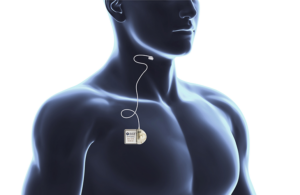
Findings come from the OSPREY study, which London-based LivaNova used to support FDA approval for the aura6000 system. The approval, won last month, pits LivaNova against neurostimulators from Inspire Medical and Nyxoah. They all offer an alternative to traditional CPAP sleep respiratory systems in treating obstructive sleep apnea (OSA).
LivaNova said its OSPREY study demonstrated clinically significant improvements against the control for users of aura6000 at month seven and sustained improvements through month 13, corresponding with six and 12 months of therapy, for which LivaNova previously shared data.
LivaNova plans to build on its approval and clinical data by preparing its next-generation OSA device for a supplemental FDA submission. It has the device under development for MRI compatibility, remote and secure configuration management capabilities and long-lasting, rechargeable battery technology lasting up to 15 years.
The company expects to commercialize the new OSA product independently in 2027.
More about the study
OSPREY evaluated pHGNS as a potential alternative for adult OSA patients who prove intolerant of positive airway pressure (PAP) therapy. pHGNS uses six electrodes placed on the proximal trunk of the hypoglossal nerve. It offers broad access to the muscles controlling the airway and a wider set of titration options.
OSPREY included 104 adults, evaluating the proportion of patients achieving at least a 50% improvement from the baseline apnea-hypopnea index (AHI) and an AHI of <20 events/hour (e/hr) at M7 (primary endpoint) following randomization, improvements in oxygen desaturation index (ODI) and PROs, and safety. An open-label extension followed the seven-month endpoint, with all participants receiving therapy until month 13.
LivaNova reported marked improvements in subjective measures, including functional sleep outcomes and daily fatigue effects. Therapy proved clinically meaningful with pHGNS treatment, with no serious adverse events reported.
Commentary from LivaNova officials and investigators
Ahmet Tezel, chief innovation officer of LivaNova, said:
“This is rigorous data for the category with the highest-quality evaluation of neurostimulation safety and effectiveness in OSA to date. LivaNova’s pHGNS technology is designed to provide more complete control of the tongue and airway, enabling the ability to treat a wide range of challenging patients compared to previous HGNS pivotal studies, including patients with higher AHI, higher BMI, and complete concentric collapse, and delivers durable, holistic clinical responses. The results over time are quite compelling.”
Lucile Blaise, global head of commercialization, OSA, at LivaNova, said:
“OSA affects up to 1 billion people worldwide, yet the majority of patients remain undiagnosed and untreated. With strong clinical results, a dedicated team, and a commitment to innovation, we are eager to make this treatment available to patients in need of an alternative therapy.”
Dr. Atul Malhotra, lead investigator for OSPREY and professor of medicine/sleep specialist at UCSD, said:
“Previous HGNS studies have largely been case series of highly selected OSA patients, leading to a deficiency in the evidence base. OSPREY was designed to overcome that challenge by including participants with diverse demographics, as well as a broad range of OSA severity to better represent patients who are commonly seen in clinical practice. We carefully assessed pre-specified objective endpoints and several subjective patient-reported outcomes, making our findings more comprehensive than prior studies in this area. For patients battling moderate to severe OSA, OSPREY’s aggregate data clearly demonstrate improvement in both objective OSA severity and associated factors such as daytime sleepiness and other PROs.”