The company shared randomized controlled trial data at the American College of Cardiology (ACC) 2026 in New Orleans. It simultaneously published findings in the Journal of the American College of Cardiology.
Data demonstrated for the first time that supporting the left ventricle (LV) with an Impella CP for more than 40 minutes prior to reperfusion does not reduce nor increase heart muscle damage (myocardial infarction).
Greater infarct size correlates to a higher risk of dying or developing heart failure, the company said. Findings support future studies on whether pre-percutaneous coronary intervention (PCI) treatment with Impella CP opens a window of time that enables the delivery of adjunct pharmacotherapies designed to reduce reperfusion injury.
Johnson & Johnson MedTech’s STEMI DTU (ST-segment Elevation Myocardial Infarction Door-To-Unloading) trial is a mechanistic study. It investigates the impact of LV unloading on infarct size.
Overall findings proved neutral, the company said. The primary endpoint did not demonstrate that LV support plus delayed reperfusion reduces heart muscle damage in patients with anterior STEMI without cardiogenic shock compared to PCI alone.
J&J MedTech said the hypertensive nature of most anterior STEMI patients enrolled may have limited Impella CP’s ability to reduce LV wall stress and unload the LV. This contributed to the neutral results, the company said.
More on the findings from Johnson & Johnson MedTech
Johnson & Johnson MedTech said it leads in the science of LV unloading. It remains dedicated to its STEMI DTU research program. Future studies may combine Impella and adjunct pharmacotherapy to optimize loading conditions. This could improve myocardial salvage with LV unloading before PCI for patients suffering from a heart attack.
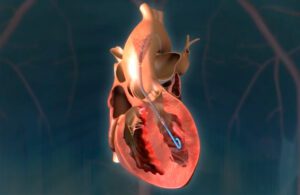
The company continues to advance Impella, acquired in the 2022 deal that brought Abiomed to J&J, as a miniature heart pump that temporarily takes over the heart’s pumping function. It allows the heart to rest and recover while maintaining the flow of oxygenated blood throughout the body.
Older patients (61+) enrolled in STEMI DTU demonstrated a trend toward reduced infarct size with LV support and delayed PCI.
J&J also reported that higher rates of bleeding and vascular complications in the treatment arm were not associated with increased mortality at 12 months.
Compared to controls, pre-PCI TIMI blood flow significantly improved after 30 minutes of Impella CP support. It corresponded to an increase in coronary perfusion pressure as well.
The company said its observations suggest a period of patient stability on Impella CP prior to revascularization. This informs future clinical trials, it said.
Commentary from doctors on the findings for Impella CP
Dr. Gregg Stone, professor of medicine and director of academic affairs for the Mount Sinai Health System, co-principal investigator, and presenter of the study at ACC 2026, said:
“This is a landmark trial with novel insights that will impact future scientific discovery for years. STEMI-DTU challenges the standard STEMI treatment paradigm that is focused only on rapid coronary reperfusion, a directive that has not changed in the last three decades. While this trial was neutral, the results raise intriguing possibilities about potential therapeutic approaches that combine mechanical circulatory support and pharmaceutical therapy.”
Dr. William O’Neill, emeritus director of the Center for Structural Heart Disease at Henry Ford Health System and co-principal investigator, said:
“STEMI DTU is the first clinical trial to test this novel and disruptive hypothesis and demonstrate the ability to stop the ischemic clock during infarct. More research is needed in older age, abnormal lactate subsets and the impact of concomitant beta blockade. We will continue to explore LV unloading impact without PCI in STEMI patients in future studies.”
Dr. Nima Aghili, an interventional cardiologist, advanced heart failure specialist, Colorado Heart and Vascular and participating clinician in the study, said:
“During the period between Impella CP insertion and PCI, operators could bail out and perform PCI at their discretion based on patient stability. However, there was never a clinical need to begin PCI during this waiting period. We had 100% compliance. Many of my patients began to snore, suggesting that they were clinically stable enough to fall asleep. This suggests that pre-PCI LV unloading rested the heart without worsening the infarction.”