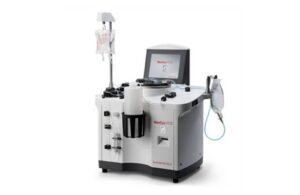
In a filing yesterday with the SEC, Haemonetics said it expects CSL to begin transitioning some of its U.S. plasma collection centers to the company’s NexSys PCS platforms and disposable apheresis kits, following a new FDA green light adding personalized donation tech earlier this year.
The company had once supplied CSL’s U.S. plasma business with its previous PCS2 collection systems, but their contract expired in mid-2022 and was not renewed. That had brought Haemonetics about $117 million in revenue during the 2020 fiscal year, amounting to nearly one-eighth of its total business at the time.
In the interim, CSL tapped Terumo’s automated Rika plasma collection systems for all of its more than 300 donation centers, completing an 18-month rollout in mid-2025. But it appears that no bridges were burned — despite Haemonetics and Terumo’s plasma patent dispute — as Haemonetics was able to hold onto CSL’s European plasma business as well as its U.S. software accounts.
The disclosure of the non-exclusive U.S. supply deal does not carry minimum purchase requirements, and Haemonetics said the scope and timing of the NexSys PCS deliveries has not yet been settled.
Still, the Aug. 18 news of the tie-up sent Haemonetics stock up about 15% in after-hours trading, with HAE shares landing at about $107 apiece this morning. The company said it plans to provide an update on the deal during its next quarterly earnings call in November, and is not yet making any changes to its financial guidance.
In a note to investors, Needham & Co. analysts said they see the potential for CSL to fully make the switch back to Haemonetics, possibly adding between $183 million to $223 million in annual revenue after a few years of transition — assuming a 6% to 8% compound annual growth rate, as well as a 10% to 20% pricing premium for NexSys’ new features. BTIG, meanwhile, raised its price target for Haemonetics from $96 to $110.
NexSys obtained an FDA clearance earlier this year for its Persona Plus technology, which Haemonetics said can help personalize collection for each donor, resulting in mid-single-digit improvements in plasma volume at a lower cost-per-liter.
Meanwhile, the American Red Cross last month declared an emergency blood shortage after the national supply dropped about 25% in June, affecting stocks of type O and B- blood as well as AB plasma.
Earlier this month, Haemonetics posted $339 million in total revenue for the first quarter of its 2027 fiscal year, which ended in June. That amounted to a 5.6% gain over the prior year’s period, with the company’s leadership citing gains in its plasma business, which brought in $155 million.