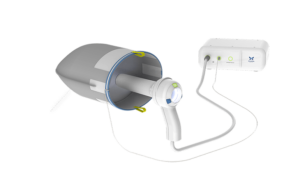
Mountain View, California-based Claria Medical designed its device to facilitate safe and efficient tissue extraction in hysterectomies. It received authorization after acceptance into the Safer Technologies Program (STeP), expediting its review.
The FDA launched STeP in 2021, modeling the program on its breakthrough devices designation program. It covers devices that could improve the safety of treatments or diagnostics.
This technology represents the first integrated tissue containment and removal system cleared by the FDA, the company said in a news release.
Claria Medical said its device features an intelligent uterine containment and extraction system designed to improve the safety and speed of hysterectomy procedures for both patients and surgeons. It has SafeStop technology, using electronic communication between its tri-layer container and a handpiece. This prevents unintended safety barrier breaches for safer, less invasive procedures.
The system utilizes a transvaginal approach to enable rapid tissue extraction without a mini-laparotomy. It has an ergonomic design to facilitate a more comfortable procedure for surgeons as well.
Claria Medical said that, among about 600,000 hysterectomies performed in the U.S. annually, approximately 30% require special techniques and tools for uterine extraction. Its device addresses the safety concerns and efficiency issues with the current approaches to these hysterectomies.
The device demonstrated the rapid extraction of large uteri in a clinical study, registering a median extraction time of four minutes.
Claria Medical CEO Alexey Salamini said:
“The safety risks associated with today’s standard of care are simply too high; women everywhere deserve a better, safer method for these vital surgical procedures. The FDA’s authorization as part of the STeP program supports the Claria System’s expected clinical benefit over currently available treatments and provides surgeons with a valuable new tool to address an urgent clinical need. Clearing this hurdle allows us to expedite our efforts to make this improved technology available to health systems, surgeons, and patients around the country.”