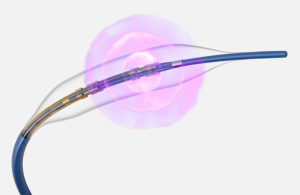
The pivotal FDA investigational device exemption (IDE) trial evaluates the use of the Seismiq 4CE coronary IVL catheter in the treatment of patients with severely calcified coronary artery disease (CAD).
Marlborough, Massachusetts–based Boston Scientific said the study met its primary safety and efficacy endpoints. Seismiq demonstrated high rates of freedom from major adverse cardiac events (MACE) at 30 days, plus procedural success. Investigators shared findings at the EuroPCR 2026 congress in Paris.
Seismiq 4CE uses laser energy within a balloon catheter to generate acoustic pressure waves that fracture calcium. Its visible, directional emitters provide controlled, consistent energy delivery at low pressure. This treats the calcium and prepares the vessel for stent implantation and maximum stent expansion to restore blood flow.
Last year, Boston Scientific entered the IVL space last year with the acquisition of Bolt Medical for up to $900 million. The Seismiq system, Bolt’s next-generation IVL technology, received FDA clearance just before the deal closed and is now in a limited U.S. rollout for above-the-knee procedures.
The advanced laser-based platform offers a treatment for both coronary and peripheral artery disease. Its novel application of lithotripsy fractures calcium by creating acoustic pressure waves inside a balloon catheter. The system also includes visible, directional emitters for consistent energy delivery in the treatment of calcified lesions.
CEO Mike Mahoney and Chief Medical Officer Dr. Ken Stein outlined future plans for the IVL technology at the J.P. Morgan Healthcare Conference in San Francisco earlier this year, with FRACTURE enrollment already completed.
A look at the outcomes shared by Boston Scientific
FRACTURE enrolled patients set for two years of post-procedure evaluation across 46 sites in the U.S. and Europe. It utilizes the Seismiq 4CE coronary IVL catheter with the same console used for the company’s existing Seismiq IVL peripheral catheter.
Boston Scientific said its non-randomized, single-arm trial enrolled 420 patients with severe CAD.
Findings included the meeting of the primary safety endpoint with a 93.3% rate of freedom from MACE. That includes cardiovascular death, myocardial infarction or target vessel revascularization at 30 days. This exceeded a prespecified performance goal of 86.2%.
Boston Scientific reported a 93.7% rate of procedural success, meeting the primary effectiveness endpoint defined as successful stent delivery with a final residual stenosis of less than 50% and freedom from in-hospital MACE. That exceeded a prespecified goal of 85.8%.
Treatment with Seismiq 4CE also resulted in 100% successful stent delivery and final in-stent residual stenosis less than 50%.
A sub-analysis of the data found a 94.2% average stent expansion rate at the most calcified segment of the artery. Investigators saw favorable stent sizing that exceeded clinically significant thresholds. This helped to create space within the vessel and support optimal stent placement.
Coronary IVL appears to be the next stage for the technology, with market leader Johnson & Johnson (Shockwave Medical) recently launching a new coronary IVL catheter and Stryker (Amplitude Vascular Systems) enrolling the first patient in a study of its own IVL technology for this space.
Commentary from company officials and investigators
Dr. Janar Sathananthan, chief medical officer, Interventional Cardiology Therapies, Boston Scientific, said:
“Representing one of the fastest growing medical device segments in both peripheral and coronary care, IVL therapy can help address a critical level of coronary artery narrowing or blockage that poses a threat of heart attack, heart failure and other serious complications. The data presented today serves as pivotal evidence to support our regulatory submission for the Seismiq 4CE catheter, which may provide physicians a new, differentiated coronary IVL device option to address severe calcium during the lesion prep phase of complex PCI procedures, potentially improving outcomes for these high-risk patients.”
Dr. Margaret McEntegart, co-principal investigator of FRACTURE and director of Complex PCI and CTO Programs at Columbia University Irving Medical Center, New York, said:
“As the prevalence of coronary artery disease and adoption of IVL therapy to address it continue to grow rapidly, data from this important trial will help advance our understanding of treatment for severely diseased, previously untreated coronary lesions and could help broaden the scope of coronary IVL treatment options over time. Notably, stents were successfully delivered in all patients treated, no deaths occurred and only one patient underwent target vessel revascularization at the 30-day follow up, underscoring reassuring safety data for the Seismiq 4CE device.”