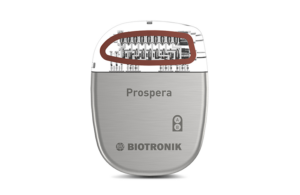
The company says its Embrace One capability advances proactive care for patients implanted with its Prospera SCS system.
Biotronik Neuro said it collects more than 200 data points per patient daily through automatic, objective remote monitoring. Its new AI capability analyzes this data to identify early signals of potential patient benefit from additional support or therapy optimization.
The company said its AI model does not make clinical decisions or adjust therapy. Rather, it provides additional insight to the Embrace One Care Team. This dedicated group of clinical specialists actively monitors patients and provides timely, personalized care between office visits.
Because Embrace One uses data collected from Prospera, it requires no additional effort from patients or healthcare providers.
At the American Society of Pain and Neuroscience (ASPN) Annual Meeting, Biotronik demonstrated the AI model’s ability to identify patients who may benefit from proactive outreach. The prospective pilot study identified 188 behavioral pattern instances across 175 patients for review by the care team. Patients responded to proactive outreach in 80.9% of cases.
Biotronik says that real-time visibility into therapy performance and device data helps identify potential issues and address them before pain relief is compromised.
The launch of this solution marks the latest milestone for Biotronik Neuro after it acquired SCS IP from Soin Neuroscience last week.
Holger Krumel, CEO, Biotronik, said:
“Biotronik Neuro is uniquely positioned to bring AI-assisted support to spinal cord stimulation because of the rich, continuously expanding real-world dataset generated through our remote monitoring capabilities. This innovation reflects our longstanding commitment to developing technologies that support patients beyond the clinic. By combining remote monitoring, personalized support, and AI-driven intelligence, we are advancing proactive care and helping SCS patients achieve stable, long-term relief.”