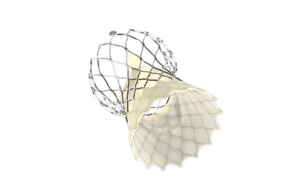
Study data highlighted the benefits of technologies including replacement heart valves, monitors and more. Companies like Medtronic, Edwards, Abbott and others showcased their latest innovations in cardiology technology.
Here are the biggest stories out of ACC 2025:
Medtronic Evolut TAVR shows durable five-year outcomes in low-risk patients
Five-year data from the Medtronic Evolut Low Risk Trial confirmed that its Evolut transcatheter aortic valve replacement (TAVR) system delivers durable clinical outcomes and strong valve performance in low-risk aortic stenosis patients.
The study evaluated the safety and efficacy of the Evolut TAVR system compared to surgical aortic valve replacement (SAVR) in patients with severe aortic stenosis and a predicted 30-day mortality risk of less than 3%, as assessed by a local heart team. A total of 1,414 patients were included in the study, with 730 receiving TAVR using Medtronic’s Evolut R, Evolut PRO, or CoreValve systems and 684 undergoing open surgery.
Patients receiving TAVR demonstrated superior valve performance over the five years, with larger effective orifice areas and lower mean gradients than those who underwent surgery. These findings align with previous studies highlighting the advantages of TAVR’s supra-annular, self-expanding valve design.
Abbott TriClip offers substantial improvements in study

Abbott also reported significant reductions in the rate of hospitalizations due to heart failure compared to medical therapy. The study saw long-term quality-of-life benefits for patients, too.
TriClip offers an option for those who aren’t good candidates for surgery and continue to have symptoms or persistent TR despite treatment with medical therapy. Delivered through a vein in the leg, the TriClip TEER technology clips together a portion of leaflets. It repairs the tricuspid valve and helps blood flow in the right direction without the need for open-heart surgery. The system received FDA approval in April 2024.
Edwards shares data supporting timely TAVR intervention
Investigators shared findings from multiple studies of Edwards technology at ACC 2025. Those studies included the EARLY TAVR trial — the first randomized, controlled FDA pivotal study designed to determine the best strategy for treating asymptomatic severe AS and the benefits of timely intervention with TAVR.
Findings included superior outcomes for asymptomatic severe AS patients randomized to Edwards transcatheter aortic valve replacement (TAVR) compared to guideline-recommended clinical surveillance (watchful waiting). Investigators saw no clinical penalty for timely intervention.
The company also shared new data underscoring the importance of urgently referring patients to a heart team for evaluation once diagnosed. Edwards says its findings further underscores the rapid, unpredictable progression of the disease. It stressed the urgency to refer patients to a heart team for evaluation and treatment.
iRhythm data highlights benefits of Zio long-term heart monitoring at ACC 2025

Results demonstrated that short-term (24-48-hour) monitoring, like with Holter devices, fails to detect a significant proportion of actionable arrhythmias, even in patients reporting “daily symptoms.” Investigators also found that symptom-rhythm correlation (SRC) comes in notably low for most arrhythmias. This underscores that the selection of monitoring duration based on the frequency of symptoms alone can lead to undetected arrhythmias.
Altogether, iRhythm says the findings highlight the benefits of Zio and the limitations of shorter-term Holter monitoring.
“These findings challenge the long-held assumption that frequent symptoms justify short-duration monitoring,” said Dr. Mintu Turakhia, iRhythm chief medical and scientific officer and EVP of product innovation.
JenaValve data backs TAVR system for treating aortic regurgitation

JenaValve’s latest analysis on Trilogy included procedural and 30-day safety outcomes from 500 patients. It also featured one-year follow-up data on more than 300 patients, including one from the core ALIGN-AR trial.
TAVR currently serves as an option to treat aortic stenosis (AS), but JenaValve hopes to expand its indications to include AR, potentially helping a previously underserved population, the analysts said. An approval would also widen Edwards’ share in the TAVR market. The company, already a leader with its Sapien valves, agreed to acquire JenaValve as part of a $1.2 billion double M&A swoop alongside Endotronix last July.
GE HealthCare announces U.S. launch of imaging agent to detect CAD at ACC 2025
At ACC 2025, GE HealthCare said that it made its Flyrcado (flurpiridaz F 18) PET imaging agent injection available in some U.S. markets.
GE HealthCare describes Flyrcado as a first-of-its-kind unit dose positron emission tomography myocardial perfusion imaging (PET MPI) agent. The FDA approved it last year as a radioactive diagnostic drug for people with known or suspected coronary artery disease (CAD). GE HealthCare says it delivers higher diagnostic efficacy compared to single-photon emission computed tomography myocardial perfusion imaging.
GE HealthCare’s ACC.25 announcements also included AI-powered innovation. The company introduced the Revolution Vibe CT system with Unlimited One-Beat Cardiac imaging and AI features.