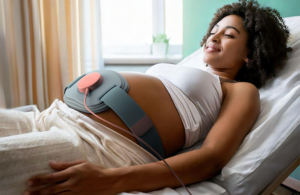
The company said the partnership could help bring a breakthrough in fetal brain monitoring developed at Yale from laboratory discovery to global commercialization. By partnering with Aegis Ventures, Wavelet aims to co-create and scale the first non-invasive, AI-powered fetal electroencephalography (EEG) monitoring platform.
According to Wavelet, it aims to detect fetal brain distress in real time and prevent avoidable brain injury at birth. It aims to fill gaps created by reliance on fetal heart rate monitoring, which fails to directly measure neurological function. This can often miss cases of hypoxia that lead to lifelong disability and unnecessary C-sections driven by false positives.
More about the Wavelet technology
Wavelet uses non-invasive EEG captured through the mother’s abdomen and reconstructed with proprietary AI algorithms. Head of Science, Dr. Jose Cortes-Briones, developed the algorithms. This technology identifies auditory-evoked brain responses that signal neurological distress. It achieves this without invasive scalp electrodes or added risk to the mother or baby.
“Until recently, noninvasive fetal EEG from the maternal abdomen was not feasible; we are now harnessing AI to reconstruct fetal EEG and translate it into quantitative markers of fetal distress,” said Dr. Cortes-Briones.
Aegis, a venture studio specializing in health tech, met Wavelet through its relationship with Yale Ventures. With Aegis’ backing, the company aims to deliver a significant evolution in fetal monitoring. It currently has its technology under evaluation at three clinical sites, with plans for expanded trials.
“This is the moment breakthrough science becomes scalable impact,” said CEO Liz Golden. “Aegis brings the ecosystem, experience, and capital needed to accelerate product development, clinical adoption, and commercialization. Together, we have a real opportunity to redefine what ‘standard of care’ means in fetal medicine – and to save lives.”