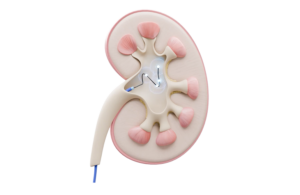
Phoenix-based Verve develops non-invasive renal pelvic denervation technology for uncontrolled hypertension. It hopes to commercialize its novel, targeted therapy to address the global burden of high blood pressure.
Potential entry into the renal denervation (RDN) space could pit it against current leaders. Medtronic and Recor Medical currently have offerings on the market. Meanwhile Boston Scientific also entered the fray after its acquisition of SoniVie.
Unlike traditional, catheter-based RDN approaches, Verve Medical said its RPD therapy directly targets overactive renal nerves using radiofrequency (RF) energy in the urinary tract, rather than the bloodstream. Medtronic’s Symplicity Spyral delivers RF energy to nerves near the kidneys in a minimally invasive procedure. Recor’s Paradise uses ultrasound energy to denervate the sympathetic nerves surrounding the renal arteries. The SoniVie system also uses ultrasound energy, rather than RF.
The technology delivers RF energy into the densely enervated renal pelvis through an outpatient procedure. Leveraging the urinary tract also enables potential procedures in the popular ambulatory care settings.
“Hypertension remains one of the most pervasive and dangerous global health challenges, contributing to heart attacks, strokes, heart failure, kidney disease and vascular damage,” said David Perry, CEO of Verve Medical. “For patients whose conditions remain uncontrolled despite medication, Verve’s RPD technology offers a targeted, energy‑based approach with the potential to transform care.”
More about the Verve Medical study
Verve Medical’s RPD Pilot study builds on results from the TUSK feasibility study. That study demonstrated an average reduction of approximately 20 mmHg in systolic blood pressure. It evaluated patients treated through one year of follow-up.
Findings from that study highlighted the potential of renal pelvic denervation to reduce blood pressure.
Verve said today that Dr. Michael Borofsky of the University of Minnesota performed the first procedure in its new trial. It will enroll 60 patients across 10 U.S. sites. Borofsky, an associate professor and director of endourology fellowship at the University of Minnesota and M Health Fairview, specializes in kidney stone procedures and advanced endourological procedures.
The company said its procedure takes advantage of the relationship between urology and nephrology specialties. It combines urologists’ expertise in accessing the renal collecting system with nephrologists’ understanding of blood pressure regulation and its relationship with renal function.
Investigators plan to randomize participants to receive either RPD therapy or a sham procedure.
“We are excited to build on the momentum from our TUSK trial and are prepared to replicate and expand those results,” said Terry Buelna, chief technology officer and founder of Verve Medical. “Our goal is to redefine what’s possible in both office and ambulatory blood pressure reduction and bring patients a new era of hypertension management.”