The biggest names in cardiac care gathered in San Diego for the Heart Rhythm Society (HRS) 2025 Annual Meeting.
Topics ranged from pulsed field ablation (PFA) to insertable cardiac monitors, with AI and other technologies also generating interest.
All of the data shared at HRS 2024 demonstrated the never-ending innovation in cardiac care, while also highlighting what the future may hold for the space.
Last year’s edition of HRS brought plenty of exciting stories — as did 2023’s. Here’s a look at some of the biggest stories to come out of Heart Rhythm Society 2024:
Multiple Medtronic technologies make waves
Medtronic kicked off HRS with a major regulatory milestone backed by clinical data, then further supported its PFA platforms.
First, the medtech giant announced that it received FDA approval for its OmniaSecure defibrillation lead for right ventricle placement.
The company says OmniaSecure is the world’s smallest defibrillation lead, coming in at 4.7 French, or 1.6mm. That equals about the diameter of graphite in a wooden pencil.
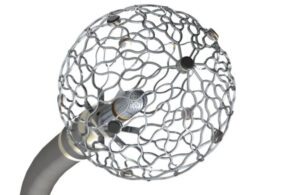
Additionally, Medtronic announced positive clinical outcomes from two studies of its PFA technologies.
The studies looked at the Affera family of technologies. Those include the next-generation Sphere-360 single-shot PFA catheter and the Sphere-9 combination mapping and dual-energy focal PFA catheter.
“True to our Medtronic mission for patients and legacy of innovation, we are delivering our best-in-class technologies to physicians and improving care for AFib patients, and we are not slowing down,” said Rebecca Seidel, president of the Cardiac Ablation Solutions business at Medtronic. “These results signify another step forward and energize us as we continue to earn and build our leadership position in electrophysiology every day.”
Abbott PFA and leadless pacemakers generate positive data
Like Medtronic, Abbott had its own good PFA news, plus more positives on leadless pacemaker technology, too.
First, new study data shared at HRS demonstrated the safety and efficacy of the Abbott Volt PFA platform. Volt provides a single-catheter PFA approach to improve workflow and provide procedural flexibility. The company designed Volt to address the limitations of existing PFA technologies. It paired a balloon-in-basket catheter with the EnSite X EP heart mapping system. Ensite X helps physicians visualize and position tools like the Volt PFA catheter in the heart.

The study delivered evidence of strong long-term performance for the Volt PFA system. It demonstrated sustained performance in safety and effectiveness at 12 months for both PAF and PersAF patients.
Then, the company shared findings from an acute clinical feasibility study of its Aveir Conduction System Pacing (CSP) system at HRS.
Abbott’s study marks the world’s first assessment of a leadless pacemaker delivering conduction pacing to the heart’s left bundle branch (LBB) area. CSP targets the LBB area by enabling pacing that mimics the heart’s natural electric rhythm. The company completed the world’s first human leadless LBB area pacing (LBBAP) cases with Aveir in the study in December.
The AVEIR CSP acute clinical feasibility study demonstrated successful implantation of the pacemaker deep into the wall separating the left and right chambers of the heart. Many achieved LBBAP. All patients received the Aveir ventricular (VR) leadless pacemaker at the end of the procedure.
A range of Boston Scientific platforms perform well in studies
Findings presented at HRS supported a range of Marlborough, Massachusetts-based Boston Scientific’s technologies for stroke prevention and cardiac rhythm management.

Key highlights included long-term results from the PRAETORIAN XL trial evaluating the Emblem subcutaneous ICD (S-ICD). It pitted Emblem against traditional, transvenous ICDs. Additionally, Boston Scientific’s OPTION trial sub-analyses evaluating the Watchman FLX LAAC device reinforced the strength of the platform. Finally, research indicated that an AI-guided heart rhythm adjudication delivered as much accuracy as expert electrophysiologists (EPs) at classifying atrial arrhythmias.
“Data presented from this year’s meeting reinforces the long-term safety and efficacy of key therapies and devices within our cardiology business, such as the Emblem S-ICD System and Watchman FLX LAAC device, while pushing us forward in promising areas like artificial intelligence,” said Dr. Kenneth Stein, SVP and chief medical officer, Boston Scientific. “We’re proud to partner with hardworking investigators who are dedicated to advancing the clinical evidence that allows us to prove the impact of our technologies on patients across the globe.”
Johnson & Johnson MedTech has strong data for Omnypulse ablation, PFA
Three-month findings from a study evaluating the investigational Johnson & Johnson MedTech Omnypulse platform presented at HRS delivered positive results.

J&J said it designed the platform to enable AFib strategies with a single device. It combines a large ablation area with the ability to create high-density maps.
“The 3-month data provide encouraging early evidence of the Omnypulse platform,” said Dr. Mattias Duytschaever, Department of Cardiology, Electrophysiology Section, AZ Sint-Jan Hospital, Brugge, Belgium. “What’s most compelling is the combination of 100% acute and strong remap success with a low rate of safety events.
Additionally, J&J shared VARIPURE findings for its Varipulse platform in PVI for AFib. Across 13 European sites, the post-market study included 247 patients and 40 operators with varying experience. Some were first-time users.
Notably, the study saw zero serious adverse events and no complications, including zero neurovascular events or coronary spasms. The company resumed sales for Varipulse in February after a temporary pause due to reports of neurovascular events.
iRhythm’s long-term cardiac monitor supported by more real-world evidence
When comparing its Zio long-term continuous monitoring (LTCM) to other available options, iRhythm says its platform comes out on top.

The AVALON study aimed to assess the impact of ambulatory cardiac monitoring strategy on three key clinical outcomes. It looked at diagnostic yield, likelihood of repeat testing and likelihood of CV events. Outcomes reflect both immediate diagnostic effectiveness of Zio and its longer-term clinical implications.
AVALON observed an association between Zio and a lower likelihood of cardiovascular (CV) events, too.
“Once again, we have strong real-world evidence that compellingly demonstrates the superiority of Zio’s 14-day, uninterrupted, patch-based monitoring — AVALON extends findings beyond Medicare to patients in common commercial insurance plans,” said Dr. Mintu Turakhia, iRhythm chief medical and scientific officer and EVP of product innovation.
One-year results back the Kardium PFA platform
Findings from the PULSAR IDE study shared by Kardium at HRS highlighted the safety and efficacy for the Globe PFA system, which currently remains under premarket review with the FDA.
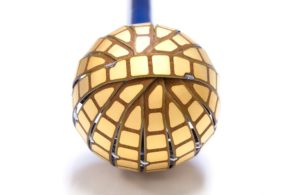
Globe catheter sensors provide proprietary Contact maps to identify electrodes in contact with cardiac tissue. This helps to ensure therapy for AFib is effectively delivered.
The technology delivers just 1.2 applications per vein on average, making it a single-short PFA solution. It has integrated mapping and ablation all built into one single catheter.
Kestra Medical has positive wearable defibrillator data
At HRS, Kestra Medical further bolstered the clinical evidence for its Assure wearable cardioverter defibrillator (WCD).

Kestra said the analysis revealed high patient compliance for the WCD. That includes a median daily wear time of 23.3 hours and consistent usage. That usage often extended beyond 90 days, highlighting the importance of sustained device use in protecting patients at risk of sudden cardiac death.
This data publication marks another recent milestone for Kestra, which last month went public following an upsized initial public offering (IPO).
HeartBeam study of 12-lead ECG supports FDA submission
A study of the HeartBeam synthesized 12-lead electrocardiogram (ECG) met its clinical endpoints, the company said at HRS.

HeartBeam develops 3D ECG technology that captures the heart’s electrical signals in 3 non-coplanar directions. It then synthesizes the signals into a 12-lead ECG using a personalized transformation matrix. Data from the VALID-ECG study formed the basis of HeartBeam’s FDA application for the 12-lead ECG synthesis software. The company submitted for approval in January 2025.
The study evaluated the mean difference in ECG intervals and amplitudes between HeartBeam’s synthesized 12-lead ECG and a simultaneously collected standard 12-lead ECG. These are important in assessing non-life-threatening arrhythmias. VALID-ECG enrolled 198 patients across five U.S. clinical sites.
Data demonstrated a 93.4% overall diagnostic agreement. That indicated that HeartBeam’s 12-lead ECG can support the diagnosis of arrhythmias in a manner consistent with standard 12-lead ECGs.
Analysts share their thoughts on HRS findings
BTIG analysts Marie Thibault, Sam Eiber and Alexandra Pang’s initial reaction to HRS centered around all the PFA buzz. They note that, while the likes of Medtronic, Abbott, J&J and Kardium brought positive news to the event, Boston Scientific remains the leader in the clubhouse.
That especially rings true after the company delivered more positive clinical findings for its Farapulse platform recently.
“While it is hard to imagine any player replicating BSX’s splashy success in PFA and the company is continuing to stay a step ahead, we think these new technologies will gain some market share while helping sustain accelerated electrophysiology (EP) market growth,” the analysts wrote.