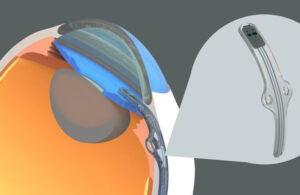
The Shifamed portfolio company received FDA investigational device exemption approval for its Calibreye system in August 2025.
Since there’s currently no cure for glaucoma, disease progression is managed through intraocular pressure (IOP) reduction to preserve vision and prevent optic nerve damage. Traditional glaucoma surgery and recently developed minimally invasive surgical devices are not always successful in lowering IOP and don’t offer the same degree of individual adjustability that the Calibreye system is designed to provide.
Calibreye’s aqueous shunt is designed to optimize IOP reduction in patients with moderate to severe glaucoma by enabling post-operative slit lamp-based outflow adjustments, treating patients as their individual needs evolve. The Calibreye system could become the first aqueous shunt to provide adjustable and reversible outflow control.
“Subconjunctival filtration procedures like Calibreye are currently being evaluated in a small percentage of eligible moderate to advanced glaucoma patients who require significant pressure reduction,” Myra Vision President and CEO Robert Change said in a news release. “The personalized IOP control provided by Calibreye will offer physicians greater confidence to address the needs of these underserved patients.”
The Adapt trial will evaluate the safety and effectiveness of the titratable glaucoma system in a prospective, multicenter, nonrandomized open-label study with a 12-month primary effectiveness endpoint. Myra plans to enroll up to 70 patients with refractory glaucoma.
“Having been involved in the development of this device for many years, it is incredibly rewarding to see our research come to fruition and now move into the U.S. clinical study,” Myra advisor Dr. Ike Ahmed said in the release. “Titratable glaucoma therapy has the potential to provide a meaningful solution for the significant number of these patients in need.”
The initial Calibreye case was conducted by Dr. David Godfrey at Glaucoma Associates of Texas.
More at Medical Design & Outsourcing: Nitinol is making next-gen glaucoma implants safer and less invasive