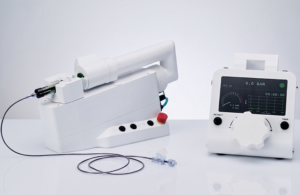
Inflante contributes pressure profiles, inflation timing and procedural state to the multi-modal data layer recorded by the Sentante platform. It replaces the manual indeflator with a digitally controlled interface offering repeatability and real-time feedback.
Kaunas, Lithuania-based Sentante said the launch marks a key step in its strategy to digitize the cath lab. It believes the technology complements its existing surgical robot platform as it advances toward a fully integrated, data-driven workflow.
The Sentante robot is a haptic endovascular robotic platform using standard cath lab equipment, such as guidewires and catheters. These devices connect to a system equipped with a high-resolution sensory platform capturing the specialist’s hand movements. Unlike joystick-controlled surgical robots, it delivers authentic force feedback to the surgeon’s fingertips, the company says. This recreates the tactile experience of manual surgery.
Sentante’s tele-operated system enables life-saving interventions from seated positions at high-resolution screens displaying X-ray imagery. This frees surgeons from radiation exposure and the physical strain of standing for prolonged periods. The robotic system received CE mark approval earlier this year.
Read more about what’s next at Sentante at Medical Design & Outsourcing.
According to Sentante, balloon inflation remains central to procedures like angioplasty and stent deployment. However, the manual nature of inflation leads to limited precision and no structured data capture.
Inflante addresses this with digital pressure control and high-resolution adjustment, plus real-time feedback and monitoring. The technology’s integrated data capture also helps feed the multimodal substrate feeding the company’s physical AI roadmap, it says. By reducing manual variability, Inflante can improve outcomes while lowering clinician cognitive load.
Sentante said the system integrates with existing cath lab workflows while supporting its broader robotic and remote intervention platform. It enables more stable inflation, reduced manual strain and improved reproducibility, the company says.
The company is developing Inflante as both a standalone tool and as a part of its robotic platform. It hopes to support future remote and autonomous procedures. Inflante currently holds CE mark, while the company works through the FDA regulatory pathway as a standalone device.
“Endovascular procedures are still full of analogue steps that introduce variability,” said Edvardas Satkauskas, co-founder and CEO of Sentante. “Our digital indeflator transforms one of those steps into a precise, data-rich process within a fully digital ecosystem.”
Satkauskas added that every digitized step represents “a step toward more consistent, scalable and accessible treatment
“Precision in pressure control is fundamental,” said Dr. Tomas Baltrūnas, co-founder and chief medical officer of Sentante. “Digitising this process improves control today while enabling better learning and outcomes over time.”

