Science Corporation announced that it launched a patient registry to bring its brain-computer interface (BCI) technology to more patients.
The launch of the patient registry aims to connect patients to the company’s Prima vision-restoring retinal implant. It designed the BCI technology for age-related macular degeneration (AMD), retinitis pigmentosa (RP) and Stargardt disease.
Science owns the Prima retinal implant technology developed by Pixium Vision. The Prima System, a photovoltaic substitute of photoreceptors, already has FDA breakthrough device designation. It provides simultaneous use of the central prosthetic and peripheral natural vision.
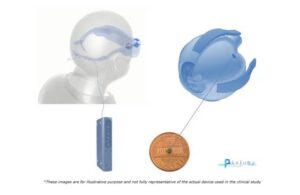
Prima restores vision by directly activating the retina if rods and cones have been lost. It features a small light-powered implant placed under the retina and a special pair of glasses. The glasses have an embedded camera and infrared projector that sends light signals to the implant to provide power and data.
Science submitted Prima for commercial availability in the U.S. and Europe in June. As it looks to bring the system to market, it aims to identify and treat patients who can benefit most from the BCI. It expects the registry to track functional aspects of central vision like reading, face recognition and mobility.
“We envision a future where patients have multiple treatment options—next generation PRIMA implants—to best match their specific disease conditions,” the company said. “Registry participants can gain priority access to these emerging treatments as they enter clinical testing.”
Neuralink co-founder Max Hodak founded Science, which unveiled its Science Eye BCI platform in 2022. The Science Eye is a visual prosthesis that targets retinitis pigmentosa (RP) and dry age-related macular degeneration (AMD), two forms of serious blindness. Science featured on MassDevice‘s list of BCI companies you need to know in 2024.