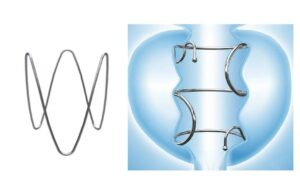
Dublin, Ireland-based ProVerum won approval for its ProVee system. Zenflow got the green light for its Spring implant and delivery system.
Both companies aim to offer a potential treatment for BPH, a common urological condition for men. BPH occurs when the prostate grows larger and it can result in pressure on the urethra, making it harder to urinate. Symptoms then disrupt quality of life, including difficulty starting or fully emptying the bladder, a weak or interrupted stream, increased frequency and urgency, nighttime urination and discomfort.
According to NIH, an estimated 32 million men over the age of 60 in the United States and 79 million men worldwide live with BPH.
More on the ProVerum ProVee system
The ProVee next-generation system features a nitinol stent designed to gently reshape the enlarged BPH prostate and alleviate associated lower urinary tract symptoms. The system is deployed through a low-profile, flexible, steerable delivery system with integrated imaging. This system comes in at the same size as office-based endoscopes routinely used for diagnosing BPH.
The ProVee stent has an atraumatic profile, universally sized to treat all indicated anatomy. It has no crossing struts to minimize potential encrustation as it supports the three dominant lobes of the prostate. ProVerum designed the system to accommodate the verumontanum and fit between the bladder neck and external sphincter.
Additionally, ProVee features radial force tuned to gently push against prostatic tisse. The company designed it as a reversible option, capable of retrieval for any reason at any time.
ProVerum supported FDA approval with results from its ProVIDE study that met all primary and secondary endpoints. The study demonstrated significant and durable symptom relief and improvements in urinary flow through 12 months. Investigators saw no device- or procedure-related serious adverse events and no patients required catheterization post-procedure.
The company also recently raised $80 million to support the commercialization efforts it can now pursue with this approval.
“FDA approval of the ProVee System marks a major step forward for ProVerum and for men living with BPH,” said Paul Bateman, CEO of ProVerum. “With the ProVee System, urologists have a safe, effective and straightforward procedure that can deliver meaningful symptom relief and improvement in quality of life.”
More on the Zenflow Spring system
Zenflow designed the nitinol Spring implant and delivery system for the treatment of symptoms associated with BPH. The novel, first-line interventional therapy provides urologists with a minimally invasive option with demonstrated long-term durability and unique safety advantages. Those include no post-procedure catheterization and the ability to reverse treatment if desired.
Spring opens the urethra while preserving natural anatomy through a proprietary, small, spring-like implant. The company touts it as the only FDA-approved first-line interventional therapy in a range of lengths and diameters, allowing for patient personalization.
The superelastic nitinol device is implanted in an outpatient procedure using the company’s recently FDA-cleared Spring scope, a single-use, flexible cystoscope.
Zenflow says that Spring, unlike other BPH interventions, eliminates burning, cutting, piercing or resecting tissue. The system’s unique design also offers complete reversibility. The company supported its FDA approval with study results that met all primary safety and effectiveness endpoints.
“Today’s FDA approval marks the culmination of years of innovation,” said Shreya Mehta, CEO of Zenflow. “Urologists and patients alike have long sought a flexible, gentle solution that combines the reversibility of medication with the long-term durability of an interventional approach. For the first time, men living with BPH symptoms have a choice that offers relief without compromise. We are excited to bring this new therapy to market.”
What these approvals mean for the BPH market
BTIG analysts Ryan Zimmerman and Iseult McMahon note that the clearances may provide a new hurdle for Procept Biorobotics (Nasdaq:PRCT), which develops a surgical robot platform that delivers what it calls Aquablation: waterjet resection that precisely eradicates prostate tissue.
The analysts say both pivotal trials evaluated men with BPH with prostate sizes of 25cc to 80cc. This suggests that the ProVerum and Zenflow systems will primarily target smaller prostate sizes, which comprise the majority of the BPH market, the analysts say.
“Suffice to say, they present as compelling first-line therapeutic options, which can be done under local anesthesia or light sedation without a catheter needed (and have been shown to be durable out multiple years as is the case with Zenflow),” the analysts said. “We think it’s important to highlight as these systems are likely to present incremental competition to PRCT in the quarters ahead as they launch.”
Zimmerman and McMahon also labeled the competitors as “decently funded.” They remain neutral on Procept amid this news and the potential new options for treating BPH.
“We also believe shares will not recover unless sustained improvements in utilization are seen in numbers and these new options certainly make that incrementally harder (in our view),” the analysts concluded.