Austin, Texas-based Phantom Neuro can now proceed with the CYBORG early feasibility study evaluating its Phantom X system. It says approval marks a critical step toward U.S. clinical trials and eventual commercialization. The company opened a patient registry ahead of planned trials last fall.
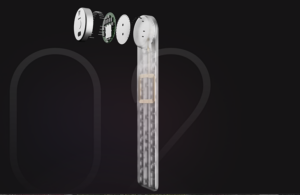
Phantom X, a robotic control system, was designed as a minimally invasive neural interface. With a small sensor array implanted just beneath the skin in an outpatient procedure, it provides intuitive control of prosthetics and robotic devices.
The platform uses algorithms to decode natural human movement and provide a near-human experience when controlling prosthetic limbs and assistive technologies.
Phantom Neuro won FDA breakthrough device designation for the technology in March 2025. It then raised $19 million in a Series A financing round a month later, bringing its total funding to $28 million.
The company plans for its study to evaluate Phantom X’s safety, efficacy and usability. It expects to enroll up to 10 upper-limb, below-the-elbow unilateral amputee patients in Melbourne, Australia.
Participants undergo a single, outpatient, same-day implantation procedure. Then, investigators plan to follow them for approximately two weeks before fitting them with a Phantom X-compatible prosthetic device. The study then evaluates the participants over approximately 20 weeks.
Commentary from Phantom Neuro officials
Connor Glass, founder and CEO of Phantom Neuro, said:
“This approval represents a defining milestone for Phantom Neuro. For the first time, we’re moving from preclinical validation to human implantation. This study is designed to evaluate the safety of our system and begin validating that functional, real-time control of prosthetic devices can be achieved through a minimally invasive muscle interface.”
Vinod Sharma, Phantom Neuro’s head of clinical and scientific affairs, said:
“As Phantom Neuro grows, this study will be the greatest reference point to-date for us to fine tune our technology. We chose Australia for its efficient early-stage clinical trial pathways, and the results will support our U.S. FDA IDE and a future pivotal trial.”