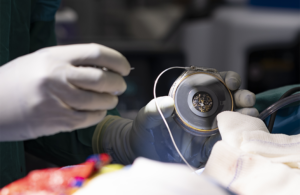
The first implant of the Connexus BCI in the Connect-One study took place at University of Michigan Health. Dr. Matthew Willsey, a neurosurgeon and biomedical engineer, and Dr. Aditya S. Pandey, along with a multidisciplinary team of providers, conducted the procedure.
Austin, Texas-based Paradromics received FDA investigational device exemption (IDE) to conduct the study in November 2025. It said at the time that it marked the first IDE approval for speech restoration with a fully implantable BCI. Willsey and his team have already demonstrated that the Paradromics Connexus BCI can be safely implanted in a human, record brain signals, and be removed intact in less than 20 minutes.
Connexus has the potential to help patients communicate after losing the ability to speak and control computer devices. Using an implantable, high-density microelectrode array, it gathers data from the brain and sends it to a discrete transceiver in the chest. Then, it transmits through the skin to an external receiver.
The system translates recorded brain signals into actionable health data. Initial focus centers around restoring independent communication through digital devices. It targets individuals living with spinal cord injuries, stroke, or ALS, a motor neuron disease.
Paradromics plans for its study to evaluate long-term use of Connexus in safely restoring speech and enabling computer control. Its first participant, a Michigan woman with difficulty speaking due to motor neuron disease, will be followed out to six years.
Commentary from Paradromics officials and investigators
Matt Angle, Paradromics CEO and founder, said:
“This implant marks a major milestone for Paradromics and for the future of high-performance brain-computer interfaces. Our team has spent years building a device designed to restore communication in a way that reflects the speed, complexity, and individuality of human expression. For people living with severe motor impairment, the ability to communicate is central to agency, identity, and connection. We are honored to begin this clinical study with our first participant and grateful for the trust she and the clinical team have placed in us.”
Willsey added:
“This technology offers new potential to help people who have lost their ability to communicate, and we are thrilled to help clinically translate this novel therapy with the team at Paradromics.”
Dr. David M. Brandman, lead principal investigator of the Connect-One Study and associate professor of neurosurgery at University of California, Davis, said:
“The Connexus BCI reflects decades of progress across the intracortical BCI research community. With the Connect-One Study, we have an opportunity to evaluate that progress in a rigorous clinical setting and better understand its potential to help people regain communication.”