• Skip to primary navigation
  • Skip to main content
  • Skip to primary sidebar
  • Skip to footer

MassDevice

The Medical Device Business Journal — Medical Device News & Articles | MassDevice

  • Special Reports
  • Technologies
    • Artificial Intelligence (AI)
    • Cardiovascular
    • Orthopedics
    • Neurological
    • Diabetes
    • Surgical Robotics
  • Business & Finance
    • Wall Street Beat
    • Earnings Reports
    • Funding Roundup
    • Mergers & Acquisitions
    • Initial Public Offering (IPO)
    • Legal News
    • Personnel Moves
    • Medtech 100 Stock Index
  • Regulatory
    • Food & Drug Administration (FDA)
    • Recalls
    • 510(k)
    • Pre-Market Approval (PMA)
    • MDSAP
    • Clinical Trials
  • Resources
    • About MassDevice
    • Leadership in Medtech
    • Manufacturers & Suppliers Search
    • MedTech100 Index
    • Videos
    • Webinars
    • Whitepapers
    • Voices
    • In-Depth Coverage
    • Latest News
  • Attend DeviceTalks
    • Events
      • DeviceTalks Minnesota – May 4
      • DeviceTalks Boston – May 27–28
      • DeviceTalks West
      • DeviceTalks Tuesdays
    • DeviceTalks Podcast Network
      • DeviceTalks Weekly
      • AbbottTalks
      • Boston ScientificTalks
      • DeviceTalks AI
      • IntuitiveTalks
      • MedtechWOMEN Talks
      • MedtronicTalks
      • Neuro Innovation Talks
      • Ortho Innovation Talks
      • Structural Heart Talks
      • StrykerTalks
  • Advertise
  • Subscribe
Home » Paradromics gets FDA nod to expand BCI compatibility to personal devices

Paradromics gets FDA nod to expand BCI compatibility to personal devices

August 27, 2026 By Skyler Rivera

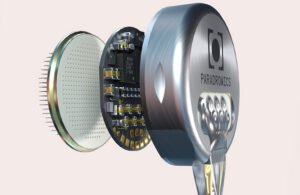
Paradromics' Connexus implant
Paradromics’ Connexus implant includes 421 microelectrodes smaller than a human hair. [Image courtesy of Paradromics]
Paradromics received FDA approval to expand the types of computing devices that could be used with its investigational brain-computer interface (BCI) system, the company told MassDevice.

“This FDA approval clears a path for our software to work on the everyday devices people already rely on – laptops, tablets, phones – so that a brain-computer interface can fit into someone’s real life rather than confine them to a fixed setup,” Paradromics Chief Clinical Officer Bill Marks told MassDevice. “ Beyond that, it’s a sign of where the entire program is heading.”

Paradromics’ Connexus BCI platform is designed to help patients with severe motor impairment communicate. The technology uses an implantable, high-density microelectrode array to gather data from the brain and send it to a transceiver implanted in the patient’s chest. The system then transmits data through the skin to an external receiver.

Related: Paradromics has a new chief clinical officer as it advances BCI tech

The approval expands the device’s regulatory pathway that could allow users to connect to patients’ personal, internet-connected devices, such as personal phones and laptops, rather than connecting to a company-provided computer to translate decoded neural intent.

“As we think about building BCI as a technology platform, we need to push for generalized connectivity,” Paradromics Founder and CEO Matt Angle said in a news release. “That means being able to connect with the products and technology that are already part of your life. This approval begins clearing the way toward a BCI platform that can move with the user rather than tethering him or her to a fixed computing environment.”
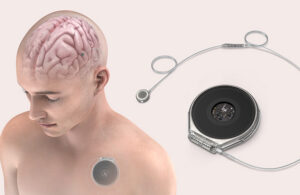
The Paradromics Connexus sytem.
Paradromics’ Connexus system includes the brain-computer interface, a chest transceiver and a flexible connector. [Illustration courtesy of Paradromics]
Paradromics’ Connect-One early feasibility study is currently underway to evaluate long-term use of Connexus in restoring speech and enabling computer control. The new expanded device-pathway will be integrated into the study. The company said the expansion represents a shift toward everyday usability, not a change in its underlying clinical care model.

Austin, Texas–based Paradromics received an FDA investigational device exemption (IDE) in November 2025, in what the company said at the time was the first IDE exemption for speech restoration with a fully implantable BCI. Paradromics completed the first Connexus implantation of its Connect-One early feasibility study in June 2026.

At that time, Paradromics said its first patient was a Michigan woman with difficulty speaking due to motor neuron disease.

“She’s been an extraordinary partner in working with our team to teach the system how she intends to communicate,” Marks recently told MassDevice. “She’s trained the system on thousands of words and sentences, and in the coming weeks, we’ll move into closed-loop use, where her intended words become text or synthesized voice in real time, expanding toward free, spontaneous conversation.

“In the months ahead, we’ll enroll additional participants and keep building – safely, and for the long term – toward a system people can use independently in their daily lives, steadily restoring what disease has taken away,” he said.


Filed Under: Biotech, Brain-Computer Interface (BCI), Business/Financial News, Featured, Food & Drug Administration (FDA), Implants, Neurological, Regulatory/Compliance, Research & Development, Surgical Tagged With: brain-computer interface, FDA, paradromics

More recent news

  • Citi downgrades Boston Scientific as cyberattack recovery compounds competitive pressure
  • Autonomix taps former Medtronic FDA counsel head for board of directors
  • Medtronic strengthens robotic surgery position with Cornerstone deal, analysts say
  • Science Corp. names president as it looks to roll out vision-restoring implant
  • Mindray looks to fill hospital ventilator gap left by Philips’ exit

About Skyler Rivera

Skyler Rivera is an associate editor at Arrowfly, covering medical device industry news and technology at MassDevice and Medical Design & Outsourcing. She began her career covering sports at The Athletic and MLB before transitioning to medical writing at Edwards Lifesciences. Based in Southern California, she holds a master's degree in science writing from Johns Hopkins University and a bachelor’s in broadcast journalism from Syracuse University. Connect with her on LinkedIn or email at [email protected].

Primary Sidebar

Cart

“md
EXPAND YOUR KNOWLEDGE AND STAY CONNECTED
Get the latest med device regulatory, business and technology news.

DeviceTalks Weekly

See More >
MDO ad
MDO ad

Footer

MASSDEVICE MEDICAL NETWORK

DeviceTalks
Drug Delivery Business News
Medical Design & Outsourcing
Medical Tubing + Extrusion
Drug Discovery & Development
Pharmaceutical Processing World
MedTech 100 Index
R&D World
Medical Design Sourcing

DeviceTalks Webinars, Podcasts, & Discussions

Attend our Monthly Webinars
Listen to our Weekly Podcasts
Join our DeviceTalks Tuesdays Discussion

MASSDEVICE

Subscribe to MassDevice E-Newsletter
Advertise with us
About
Contact us

Copyright © 2026 · Arrowfly LLC and its licensors. All rights reserved.
The material on this site may not be reproduced, distributed, transmitted, cached or otherwise used, except with the prior written permission of Arrowfly.

Privacy Policy