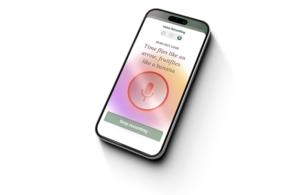
Boston- and Berlin-based Noah Labs designed Vox to detect worsening heart failure weeks before hospitalization. It uses proprietary machine learning to analyze subtle vocal changes and enable non-invasive, scalable remote monitoring for heart failure patients. Using just a five-second daily voice clip, the technology can lead to early intervention, reduce readmissions and improve outcomes. The company said it could provide assistance even in rural and resource-limited settings.
“Voice is a powerful predictor for worsening heart failure. This Breakthrough Device Designation is a pivotal milestone in Noah Labs Vox’s path to driving early access to life-saving interventions for patients with life-threatening diseases,” said Oliver Piepenstock, CEO & co-founder, Noah Labs.
Noah Labs built Vox on what it describes as the world’s largest exclusive dataset of heart failure patient voice recordings. Its dataset has more than three million voice samples to date.
The company has validated its software-only medical device across more than five multi-center clinical trials. It collaborated with Mayo Clinic, UCSF, Charité Berlin, Maastricht University Medical Center, and Hospital Clínic de Barcelona to demonstrate sensitivity in detecting worsening heart failure.
“The FDA breakthrough device designation for Noah Labs Vox is a significant achievement for heart failure care. Early detection of clinical worsening is a central challenge in managing these patients — the ability to identify deterioration weeks before hospitalization, using nothing more than a patient’s voice, has the potential to fundamentally change how we intervene and prevent adverse outcomes,” said Dr. Felix Hohendanner of Charité Berlin.