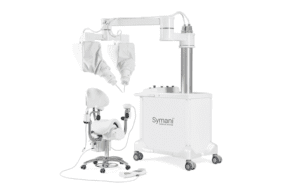
Medical Microinstruments (MMI) announced that the first patient has been enrolled in the PRECISE clinical study, a U.S. multi-center trial evaluating the company’s Symani Surgical System for robotic-assisted microsurgery.
The postmarket study is designed to assess Symani’s performance in free flap reconstruction and lymphatic repair procedures. According to MMI, PRECISE is the largest prospective clinical trial of robotic-assisted microsurgery conducted in the United States.
“The PRECISE study is a milestone for the broader field of reconstructive microsurgery,” said Mark Toland, CEO of MMI. “It reflects MMI’s commitment to building the rigorous clinical evidence needed to expand patient access to advanced microsurgical care and validate the long-term value of robotic assistance in complex procedures.”
The study will enroll up to 455 patients across major U.S. cancer centers. Two cohorts, free tissue transfer and lymphatic repair, will be followed for 30 days and three months, respectively. Key endpoints include anastomosis patency, ischemia time, limb volume reduction, device-related adverse events, and quality-of-life outcomes.
The first patient was enrolled at a nonprofit academic medical center in Los Angeles by a plastic surgery specialist, marking the official start of the trial.
“PRECISE fills a critical gap for the microsurgical community by providing real-world clinical evidence on robotic microsurgical outcomes in patient populations where precision and long-term results matter the most,” said Dr. Bohdan Pomahac, national principal investigator and division chief of plastic and reconstructive surgery at Yale Surgery and Smilow Cancer Hospital.
MMI said the study is part of a broader clinical initiative to expand the evidence base for robotic technology in reconstructive microsurgery. The Symani Surgical System is currently the only commercially available robotic platform designed specifically for microsurgical procedures. It uses wristed microinstruments, tremor-reduction, and motion-scaling technologies to enhance precision in delicate, open soft-tissue surgeries.