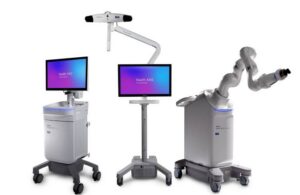
In the space of a few days, the medtech giant announced two major developments within the business. First, on Feb. 14, the company said it received FDA clearance for its Stealth AXiS robotic system for spine surgery. Then, on Feb. 17, Medtronic announced FDA approval for an expanded indication for the use of its Infuse bone graft in TLIF procedures.
Stealth AXiS brings planning, navigation and robotics together into a single, intelligent system. It received clearance for spine procedures in the U.S. and is designed for use across hospitals and the increasingly popular ambulatory surgery centers (ASCs). Infuse, meanwhile, is now the only growth factor bone graft with FDA premarket approval for ALIF, OLIF and now TLIF procedures.
The latest developments from Medtronic CST accompany recent FDA clearance for Hugo, a surgical robot that is currently indicated for urologic procedures, highlighting the company’s robotic capabilities in several areas of the body and across multiple business units.
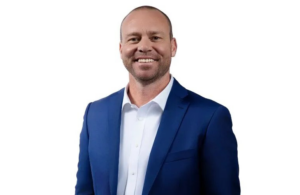
Michael Carter, SVP and president of Medtronic Cranial & Spinal Technologies, spoke to MassDevice recently to outline the significance of the company’s latest milestones and explain what’s ahead for Medtronic’s latest technologies in CST.
The following has been lightly edited for space and clarity.
What was the significance of the recent announcements?
Michael Carter: “It was a very pivotal week. I’d almost say a pivotal 24 hours, because we got the Stealth AXiS approval. It’s the first really fully integrated planning, navigation, robotics platform for spine. There’ll be other approvals in short order. Then, to get the PMA for expanding Infuse to that TLIF indication, that is huge.”
What are the main takeaways as far as the advantages of Stealth AXiS in planning?
MC: “Stealth AXiS really is the first time we’ve been able to unify the planning, navigation and robotics all into one system. [With] Stealth AXiS, if you look at that as just a standalone, it has great attributes. Before, you had pre-operative planning. … That planning now is also incorporated into the Stealth AXiS system, so it takes away one of the things you have to incorporate. The robot does it automatically, to save some time and cognitive load.”
Intraoperative advantages?
MC: “Now, you have LiveAlign, the segmental tracking, which has been kind of like the white whale in spine surgery. You can be in the procedure, you decompress the spine and there’s some segment movement, and you can actually see that in real time. You don’t have to do a spin. The patient gets less radiation, the surgeon and the staff, get less radiation, and it will drive more efficiency in the system.”
Size and design advantages?
MC: “There’s a lot of movement now from the hospital to the ASC settings. With the design of this product, with the modularity, we believe that over the course of the next 10 years, you’re probably going to see low-single-digit [percentage of] spine surgeries in the ASC [rise] to upwards of a quarter of them. This system allows surgeons and staff to adapt to that, to the smaller footprint and some of the spatial concerns, as well as the accuracy.”
How big an opportunity is the ASC setting?
MC: “In the ASC, with the changes in the CMS codes, we do believe that there’s going to be pretty sizable growth. We think it’s going to be somewhere between 20–25% of the surgery, so pretty close to a quarter of them within the next 10 years.
“With the Stealth AXiS and the modularity, there’s the footprint. In ASCs, as with the hospitals, but even more pervasive in the ASC are the efficiencies this is going to drive. Right? If you can preoperatively plan your case and see, intraoperatively, the segmental changes, that’s going to drive efficiencies. As the ASC has become more ubiquitous in the spine space, those are going to be drivers of adoption for the Stealth AXiS system, but moreover, the entire AiBLE ecosystem.”
What are the future opportunities for indications with the system?
MC: “With regards to the AiBLE ecosystem, we’re very focused beyond spine in the cranial business. We’re also very focused on ENT, and there are others. As we bring surgeons in, specifically from the cranial and the ENT applications, and they’re able to see some of the procedures that you we can do, and then they also give us ideas about where we could take this technology next.”
As Medtronic also advances other robots, like Hugo, how do these technologies complement each other across business units?
MC: “[For] the Hugo platform and Stealth AXiS platform, the two teams are fairly co-located [in Lafayette, Colorado]. There’s a lot of knowledge sharing, there’s a lot of pressure testing. The two teams are making themselves better. There are some synergies. Obviously, [they address] different areas of the body and anatomy and things like that. But, you learn from one another. There are going to be some commonalities between the systems.”
“There’s no doubt that the journey that the surgical team has taken with Hugo has been complementary to the journey we’ve done with Stealth AXiS and vice versa. Those teams work really well together.”

What about the FDA nod for Infuse, marking another milestone for Medtronic CST?
MC: “[Infuse is] the most tried and true fusion that we’ve had over the last two decades. By expanding the indications, we’re able to bring in different procedures that we haven’t been able to bring in before. We look at Infuse as a standalone. There’s Infuse, and there’s everything else. Because of the indication limitations, we’ve been a little bit constrained on what we would market.”
“It’s already been a huge part of our ecosystem. I think it’s been something that’s kind of set the pace for the spine industry. You can expect that it’ll continue to accelerate moving forward.”
Overarching takeaways from the latest milestones?
MC: “This is a culmination of a lot of work from a lot of people in the organization. I’m really proud of the team. … It’s not just the Stealth AXiS system, but this is a contribution to the entire ecosystem that’s going to reduce the variability in spine and it’s going to make surgeons better. It’s going to make patient outcomes better. We’re extremely excited about the future.”