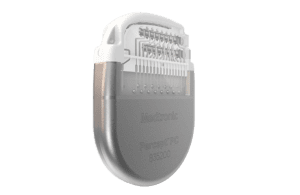
The company also received approval for its BrainSense Electrode Identifier (EI). Together, these technologies use a minimally invasive, surgically implanted neurostimulator to transmit electrical signals to specific parts of the brain affected by neurological disorders. They act as a sort of brain pacemaker to treat Parkinson’s disease.
BrainSense aDBS, delivered through the Medtronic Percept neurostimulator, provides real-time, adaptive therapy. It dynamically adjusts stimulation based on each person’s unique brain activity, both in clinical settings and daily life. The BrainSense EI technology can improve DBS programming by ensuring optimal initial contact selection in less time.
Percept with BrainSense technology records and analyzes brain signals to enable tailored therapy for each patient’s unique neurological patterns. Medtronic incorporates brain-computer interface (BCI) technolgoy into its DBS therapy. It aims to make advances in prevention, detection, diagnosis, rehabilitation and restoration for patients with complex neurological conditions.
In addition to the FDA nod, Medtronic began its European rollout for the system after winning CE mark last month. The medtech giant plans to begin patient programmings in the U.S. at select healthcare systems over the coming weeks. It plans for availability nationwide in the coming months.
“Medtronic is the only company in the world to offer an adaptive DBS system that dynamically adjusts therapy in real time. This new era in Parkinson’s care represents more than a decade of intentional innovation—ushering in personalized neuromodulation at scale that responds to a patient’s changing needs, equipping clinicians with unparalleled insights, and setting a new standard for DBS therapy,” said Brett Wall, EVP and president of Medtronic Neuroscience.
More about the Medtronic BrainSense aDBS technology
Medtronic continues to further highlight the potential of aDBS in clinical practice in the ADAPT-PD trial. It unveiled this novel approach to Parkinson’s in September 2024. The study looks at the safety and effectiveness of chronic dual and single threshold aDBS models as compared to continuous DBS across all Parkinson’s patients eligible for DBS.
Medtronic said the study remains ongoing as the largest, longest assessment of aDBS in an at-home setting. Investigators monitored participants over four phases spanning more than a year. That included baseline examination, initial aDBS setup and adjustment, evaluation and long-term follow-up. Medtronic then offered all participants extended access to aDBS therapy after the follow-up period.
Preliminary data indicates a high brain signal presence both on and off medications, in both DBS target locations and patients of all PD phenotypes.
“Our dedication to advancing DBS research and innovation has transformed therapeutic options for individuals with movement disorders and epilepsy,” said Amaza Reitmeier, VP and GM, Medtronic Neuromodulation. “With this FDA approval, which quickly followed our CE Mark, we are taking another significant step forward in delivering sensing-enabled personalized treatments to people with Parkinson’s.”
Medtronic said the development of its complete, sensing enabled DBS system puts it “at the forefront of incorporating BCI technology into DBS therapy.” The company says it considers BCI technology a crucial element for developing treatments for Parkinson’s.
“Our BrainSense technology provides unique and clinically important insights that no other DBS system can offer, using a person’s own brain signals to provide a window into their condition, in real time, over time,” said Paolo Di Vincenzo, president of Medtronic Neuromodulation. “Our focus has always been on creating solutions that work for real lives, not just standalone symptoms. aDBS reflects that commitment, bringing a new expectation in Parkinson’s treatment.”