The company also received the European regulatory nod for its BrainSense Electrode Identifier (EI). Following approval, Dr. Martijn Beudel completed the first programming of the technology in Amsterdam. The medtech giant says the approval and first-in-Europe patient programming highlight significant advancements in personalized DBS therapy for people with Parkinson’s.
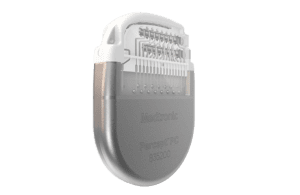
BrainSense aDBS, delivered through the Medtronic Percept neurostimulator, provides real-time, adaptive therapy. It dynamically adjusts stimulation based on each person’s unique brain activity, both in clinical settings and daily life. The BrainSense EI technology can improve DBS programming by ensuring optimal initial contact selection in less time.
Percept with BrainSense technology records and analyzes brain signals to enable tailored therapy for each patient’s unique neurological patterns. Medtronic also has work underway on incorporating brain-computer interface (BCI) technolgoy into its DBS therapy. It aims to make advances in prevention, detection, diagnosis, rehabilitation and restoration for patients with complex neurological conditions.
Medtronic plans to make the new DBS technologies available in Europe in early 2025. It already filed for FDA approval in the U.S. and awaits that nod.
“BrainSense technology is at the center of personalizing DBS therapy, and we are advancing this capability through innovation that builds on our sensing-enabled DBS platform,” said Paolo Di Vincenzo, president of the Neuromodulation business, which is part of the Neuroscience Portfolio at Medtronic. “From improved precision for contact selection to automatically adjusting DBS therapy, these milestones mark significant advancements in our ability to customize care for people with Parkinson’s, and we’re just getting started. The mission is to impact and improve many more lives with Medtronic DBS therapy.”
More about the Medtronic BrainSense aDBS technology
Medtronic has the ongoing ADAPT-PD trial underway to further highlight the potential of aDBS in clinical practice. It unveiled this novel approach to Parkinson’s in September 2024.
The global, multi-center, prospective, single-blind, randomized crossover study looks at the safety and effectiveness of chronic dual and single threshold aDBS models as compared to continuous DBS across all Parkinson’s patients eligible for DBS.
Medtronic said the study remains ongoing as the largest, longest assessment of aDBS in an at-home setting. Investigators monitored participants over four phases spanning more than a year. That included baseline examination, initial aDBS setup and adjustment, evaluation and long-term follow-up. Medtronic then offered all participants extended access to aDBS therapy after the follow-up period.
Preliminary data indicates a high brain signal presence both on and off medications, in both DBS target locations and patients of all PD phenotypes.
With the BrainSense EI, the platform further elevates its precision and efficiency with a detailed view of each patient’s unique brain signals. It guides clinicians to the exact location of the strongest signal in a fraction of the time needed for standard monopolar reviews. Medtronic said it pinpoints the optimal contact location by leveraging local field potentials (LFP) and alpha-beta activity. This guides optimized and effective programming compared to the standard of care.
“Medtronic remains the first and only company in the world to offer a complete sensing-enabled DBS system, and now we have enhanced this innovation to allow patients with Parkinson’s to spend less time thinking about their disease,” said Amaza Reitmeier, VP and GM, Neuromodulation marketing and strategy at Medtronic. “Patients and clinicians have been eagerly awaiting these BrainSense™ technology enhancements, which represent another transformative step forward in our ability to personalize therapy for people living with Parkinson’s.”

