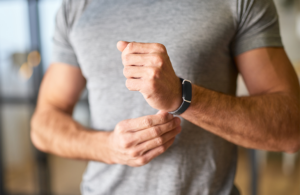
Switzerland-based Hilo, which launched out of Aktiia last year with a $42 million Series B funding round, designed Core to offer an alternative to traditional cuff-based readings. It hopes to introduce a new approach through a long-term, data-driven experience. The company said it wants to create a new category between traditional cuff-based monitors and consumer wearables.
Validated through eight clinical studies, Hilo says its technology has already been used by more than 200,000 people globally. Its U.S. rollout expands its offering to provide more comprehensive blood pressure insights in a new geography.
Core combines a lightweight wearable band, mobile app and FDA-cleared connected cuff into a unified blood pressure monitoring system. It continuously captures physiological signals to generate ambient insights.
The device uses proprietary optical technology and advanced algorithms. Calibrated and validated by periodic cuff readings, Hilo Core moves beyond point-in-time measurements to deliver long-term trend data. It captures 30-35 readings per day, the company says, including overnight insights. Then, it contextualizes them with sleep, steps and heart rate to provide a more comprehensive view of health and wellness and patterns that may signal emerging risks.
Hilo says its underlying optical blood pressure monitoring (OBPM) technology uses photoplethysmographic (PPG) signals collected at the wrist. Using this, the system estimates blood pressure without the need for frequent cuff inflation.
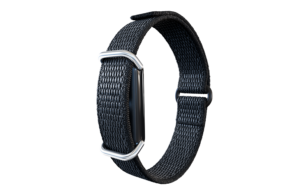
Hilo plans to make the system available nationwide today, July 21, via Hilo.com and Amazon.
Stefan Petzinger, CEO of Hilo by Aktiia, said:
“Hilo represents a fundamental shift in how we approach blood pressure, especially in the U.S., where nearly half of adults live with hypertension, and many remain undiagnosed or undertreated. For too long, blood pressure has been measured in isolated moments, leaving critical gaps in understanding. By moving to long-term, real-world insights, we’re empowering people and their care teams to take earlier, more informed action and fundamentally change how cardiovascular health is managed. And not only does Hilo provide a more comprehensive view it also puts less daily dependency on the inflatable cuff, a technology developed in 1881 that is not exactly most convenient and comfortable in day-to-day life. ”