• Skip to primary navigation
  • Skip to main content
  • Skip to primary sidebar
  • Skip to footer

MassDevice

The Medical Device Business Journal — Medical Device News & Articles | MassDevice

  • Special Reports
  • Technologies
    • Artificial Intelligence (AI)
    • Cardiovascular
    • Orthopedics
    • Neurological
    • Diabetes
    • Surgical Robotics
  • Business & Finance
    • Wall Street Beat
    • Earnings Reports
    • Funding Roundup
    • Mergers & Acquisitions
    • Initial Public Offering (IPO)
    • Legal News
    • Personnel Moves
    • Medtech 100 Stock Index
  • Regulatory
    • Food & Drug Administration (FDA)
    • Recalls
    • 510(k)
    • Pre-Market Approval (PMA)
    • MDSAP
    • Clinical Trials
  • Resources
    • About MassDevice
    • Leadership in Medtech
    • Manufacturers & Suppliers Search
    • MedTech100 Index
    • Videos
    • Webinars
    • Whitepapers
    • Voices
    • In-Depth Coverage
    • Latest News
  • Attend DeviceTalks
    • Events
      • DeviceTalks Minnesota – May 4
      • DeviceTalks Boston – May 27–28
      • DeviceTalks West
      • DeviceTalks Tuesdays
    • DeviceTalks Podcast Network
      • DeviceTalks Weekly
      • AbbottTalks
      • Boston ScientificTalks
      • DeviceTalks AI
      • IntuitiveTalks
      • MedtechWOMEN Talks
      • MedtronicTalks
      • Neuro Innovation Talks
      • Ortho Innovation Talks
      • Structural Heart Talks
      • StrykerTalks
  • Advertise
  • Subscribe
Home » Here’s where Harvard’s engineering dean sees medtech research going

Here’s where Harvard’s engineering dean sees medtech research going

May 10, 2022 By Chris Newmarker

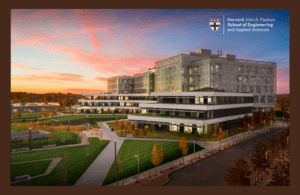
Harvard Science and Engineering Complex SEC SEAS Harvard John A. Paulson School of Engineering and Applied Sciences
Harvard University constructed a 500,000-square-foot Science and Engineering Complex (SEC) for SEAS in Boston’s Allston neighborhood in 2020. [Image courtesy of Harvard SEAS]
Surgical robotics, artificial intelligence, and combatting climate change are but some of the priorities that have Harvard’s engineering school dean excited.

Speaking today at DeviceTalks Boston, Frank J. Doyle III described the Harvard John A. Paulson School of Engineering and Applied Sciences as a “well-kept secret” historically. But Harvard engineering is staking out a strong position when it comes to medtech innovation.

Doyle noted that the school he runs has 5% of the faculty — and produces 40% of the startups out of Harvard.

The university constructed a 500,000-square-foot Science and Engineering Complex (SEC) for SEAS in Boston’s Allston neighborhood in 2020. Other exciting developments include a $500 million gift from Priscilla Chan and Mark Zuckerberg to support the Kempner Institute for the Study of Natural and Artificial Intelligence, expected to open at SEC by the end of the year.

The nearby Harvard Enterprise Research Campus project will open as early as late 2024, with the first phase adding around 1 million square feet of leasable tech space, housing and a conference center.

“The idea is to have startups in there, have outposts of big companies, have VCs in there, create an ecosystem so that we can really have a rich, collaborative environment adjacent to engineering across the street from Harvard Business School,” Doyle said. “It’s the perfect setting for the next big innovation.”

Doyle also discussed some more immediate developments. This summer, Harvard is going to announce an initiative called Grid — like an electrical power grid — to better support entrepreneurial activity in three ways.

The university’s accelerator fund “is not big enough,” Doyle said, so Grid will double or even triple its size.

The Grid initiative will also promote connectivity by building its entrepreneurs-in-residence (EIR) program with an executive director and offices in the engineering building.

The third focus of Grid will be on education, Doyle said. “We need a better roadmap for the students who come in — let’s say, sophomore year, a history major, or an electrical engineer, and say, ‘I want to be an entrepreneur, be a startup when I get out. What are the additional classes I can take to complement my major, my concentration at Harvard?'”

That third part will call for additional lecturers to “build out a robust curriculum” that will better prepare students to become researchers and  innovators and leaders not only at the university, but in the medtech industry.

Other ongoing efforts include robotics and medtech, a just-launched AI initiative and a quantum initiative that will soon be announced.

“We’ve got faculty recruiting, got a brand new building on the Cambridge campus in quantum science and engineering,” Doyle said. “This is investing in tech that will innovate medical measurement technology, it will innovate computing  … lots of exciting things happening in quantum. So watch this space [for] fast-changing developments.”

There’s one more major move looming on the horizon, Doyle said.

“We’re just about to announce a big recruiting effort in climate,” he said. “Very broadly, climate and energy tech is going to be [a big priority at Harvard], and in our school, a very big priority.”

Managing Editor Jim Hammerand contributed to this report.

Filed Under: Business/Financial News, Featured, Health Technology, News Well, Research & Development, Software / IT, Surgical, Surgical Robotics Tagged With: DeviceTalks Boston, Harvard John A. Paulson School of Engineering and Applied Sciences (SEAS), Harvard University

More recent news

  • Boston Scientific continues to make progress on cyberattack recovery
  • Edwards Lifesciences, Medtronic score CMS win for TAVR
  • Stryker still working through cyberattack after-effects, stock down more than 10% this week
  • Siemens Healthineers completes $44M R&D, manufacturing site expansion
  • Next-gen Apple Watch Ultra 4 includes new health features

About Chris Newmarker

Chris Newmarker is the executive editor of WTWH Media life science's news websites and publications including MassDevice, Medical Design & Outsourcing and more. A professional journalist of 18 years, he is a veteran of UBM (now Informa) and The Associated Press whose career has taken him from Ohio to Virginia, New Jersey and, most recently, Minnesota. He’s covered a wide variety of subjects, but his focus over the past decade has been business and technology. He holds bachelor’s degrees in journalism and political science from Ohio State University. Connect with him on LinkedIn or email at [email protected].

Primary Sidebar

Cart

“md
EXPAND YOUR KNOWLEDGE AND STAY CONNECTED
Get the latest med device regulatory, business and technology news.

DeviceTalks Weekly

See More >
MDO ad
MDO ad

Footer

MASSDEVICE MEDICAL NETWORK

DeviceTalks
Drug Delivery Business News
Medical Design & Outsourcing
Medical Tubing + Extrusion
Drug Discovery & Development
Pharmaceutical Processing World
MedTech 100 Index
R&D World
Medical Design Sourcing

DeviceTalks Webinars, Podcasts, & Discussions

Attend our Monthly Webinars
Listen to our Weekly Podcasts
Join our DeviceTalks Tuesdays Discussion

MASSDEVICE

Subscribe to MassDevice E-Newsletter
Advertise with us
About
Contact us

Copyright © 2026 · Arrowfly LLC and its licensors. All rights reserved.
The material on this site may not be reproduced, distributed, transmitted, cached or otherwise used, except with the prior written permission of Arrowfly.

Privacy Policy