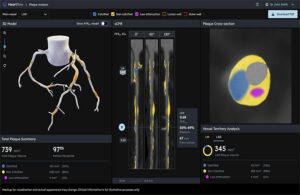
Heartflow said its legal action arises “from one of the most egregious examples of piracy in the medical technology industry” and asked the U.S. District Court for the Eastern District of Texas for an unspecified amount of monetary damages.
“We take seriously our responsibility to protect the intellectual property that supports this field and the clinicians and patients it serves,” Heartflow CEO John Farquhar said in a news release.
According to the lawsuit filed on April 13, Heartflow claims former consultant and Cleerly founder and CEO Dr. James Min secretly incorporated and launched Cleerly, “a competing enterprise built upon Heartflow’s pioneering innovations” while still under contract. Min served as a consultant from 2012 to 2017.
In a statement given to MassDevice, Min said Cleerly is aware of the lawsuit filed by Heartflow and the company is “confident in our extensive and well-established intellectual property portfolio and the originality of our technology.”
The lawsuit alleges that Min’s early visibility to Heartflow’s proprietary methods and interventions related to its technology, AI analysis and software-as-a-service business model formed the basis for Cleerly.
Heartflow claims Min incorporated Cleerly in July 2016 without disclosing the intervention to the company. Almost a year later, in May 2017, Min notified Heartflow of his termination of the consulting agreement and sought funding for Cleerly in or around June 2017, according to the lawsuit.
Related: Medical Design & Outsourcing’s 2026 Startups Special Report
While seeking funding, Min explained Cleerly was focused on using machine learning on medical images to derive quantitative measurements, the lawsuit claimed. Heartflow said Cleerly’s focus “was in the same field as [Min’s] work at Heartflow.”
Heartflow alleges that Min “used Heartflow’s Confidential Information to develop Cleerly’s competing products, in direct violation of his contractual obligations to Heartflow, including repackaging Heartflow’s “One Stop Shop” as Cleerly’s “All-in-One Platform” from 2016 to 2019.
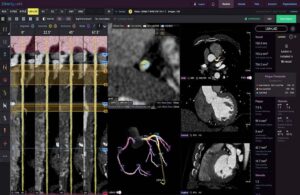
Heartflow alleges Ness brought “intimate knowledge of Heartflow’s technology, its patents, its commercial strategies, and its competitive advantages” to Cleerly and, according to the lawsuit, “used this confidential information to develop and market its infringing products.”
Over 600 patents protect Mountain View, California–based Heartflow’s noninvasive AI-powered coronary CT angiography (CCTA) automated analysis algorithm, according to the lawsuit. In the filing, the company named Cleerly’s CCTA analysis products Ischemia, Plaque Analysis and Compare, alleging that the technologies infringed on its patents with priority dates from 2012 to 2018.
Min’s written statement to MassDevice refuted Heartflow’s claims by reiterating the company’s confidence in the integrity of its technologies.
“Cleerly has published landmark clinical science that has redefined how cardiovascular disease is understood and treated, which has formed the basis of our novel technologies that provide physicians with actionable insights into their patients’ heart health,” Min said.
“Cleerly was founded on a mission to create a world without heart attacks, and we have never been more focused in our mission and committed to the patients and physicians who count on us.”